Affiliate Disclosure:Home Vacuum Zone is reader-supported. When you buy through links on our site, we may earn an affiliate commission at no additional cost to you. This does not influence our reviews or recommendations — we only recommend products we genuinely believe in.
A home steam cleaner is a boiler with a nozzle on the end. It heats water past boiling and pushes the vapour out through a pad or an attachment, so you clean sealed hard surfaces with heat rather than detergent. That’s the whole idea, and it’s a good one.
What follows covers what these machines actually do in a house, which of the three types suits yours, which floors survive steam and which don’t, and the models worth buying. If you already know you want a floor machine and just want the picks, our best steam cleaners of 2026 roundup is the shorter read.
What does a steam cleaner actually do in a home?
It does three things: it loosens dirt with heat, it sanitises with temperature, and it does both without leaving chemical residue on surfaces your kids and pets touch.
Water heated under pressure past 212°F carries a lot of thermal energy. When that vapour hits a cooler surface it dumps the energy into whatever is stuck there, breaking the bond between the grime and the tile. Grease softens. Soap scum lets go. Grout that looked permanently grey turns out to have been beige.
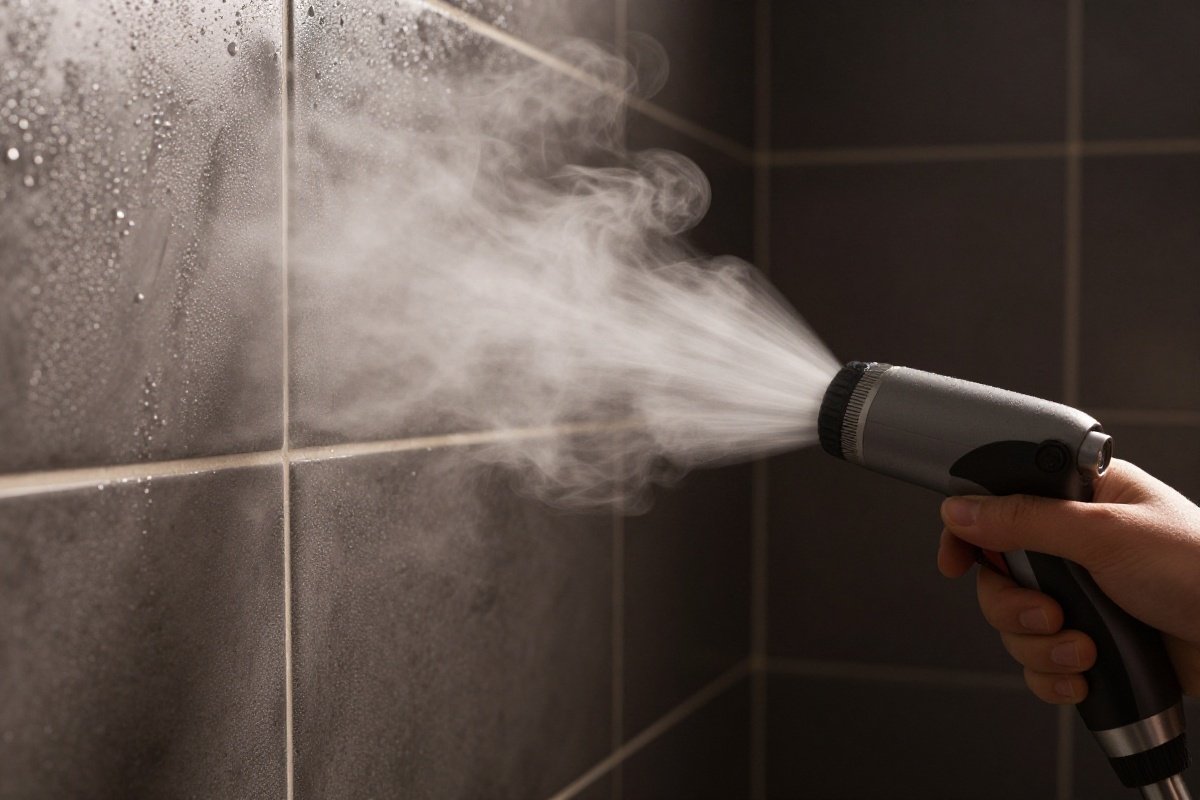
The sanitising works because heat denatures protein. Bacteria, dust mites and their waste are built from proteins that come apart above boiling point, which is why steam kills them without a disinfectant. Manufacturers all quote 99.9% and they’re not lying, but that number comes from a lab where the surface is held at temperature. A mop pad moving at walking pace cools the instant it lands. Real-world sanitising is a slow pass, not a quick one, and anyone promising otherwise is selling.
Here’s the part nobody markets: steam doesn’t lift anything. Mopping pushes dirty water around; steam leaves the loosened dirt sitting there for the pad to absorb or for you to wipe. On a floor with real soil on it, that means you’re changing pads, not admiring your work. Vacuum first. Always.
The other honest limitation is grease volume. Steam beats chemical cleaners on baked-on kitchen film, but a heavily soiled oven or a range hood full of old fat needs a degreaser and some effort. Steam finishes that job, it doesn’t start it.
Which type of steam cleaner do you need?
Three types, and the right one is decided by whether you’re cleaning floors or cleaning a house.
Steam mops
A tank, a heating element and a flat head, all on a stick. Fill it, wait about 30 seconds, push it around. Tanks run 12 to 20 oz, which is 15 to 25 minutes of steam, and the whole thing weighs 5 to 8 lbs.
Steam mops do floors and nothing else. That sounds like a criticism and isn’t. Most people who buy a steam cleaner want their kitchen tile to stop feeling tacky, and a mop does that with less faff than a canister ever will. The Bissell PowerFresh 1940 is 6.2 lbs, heats in 30 seconds, and has three steam levels so you can dial it down for sealed hardwood. The Shark Steam Pocket Mop S3501 is lighter again at 4.9 lbs with double-sided pads, so you get two clean faces per pad change.
Canister steam cleaners
A wheeled boiler with a hose and a box of attachments. Bigger tank, hotter steam, longer runtime, and it will clean things a mop can’t reach: grout, oven interiors, window frames, upholstery, the inside of a car.
The trade is heat-up time and storage. The Dupray Neat takes 8 minutes to come up to pressure and the McCulloch MC1375 takes 10 to 12. You don’t grab a canister for a spill. You get it out on a Saturday and do the bathroom properly.
Handheld steam cleaners
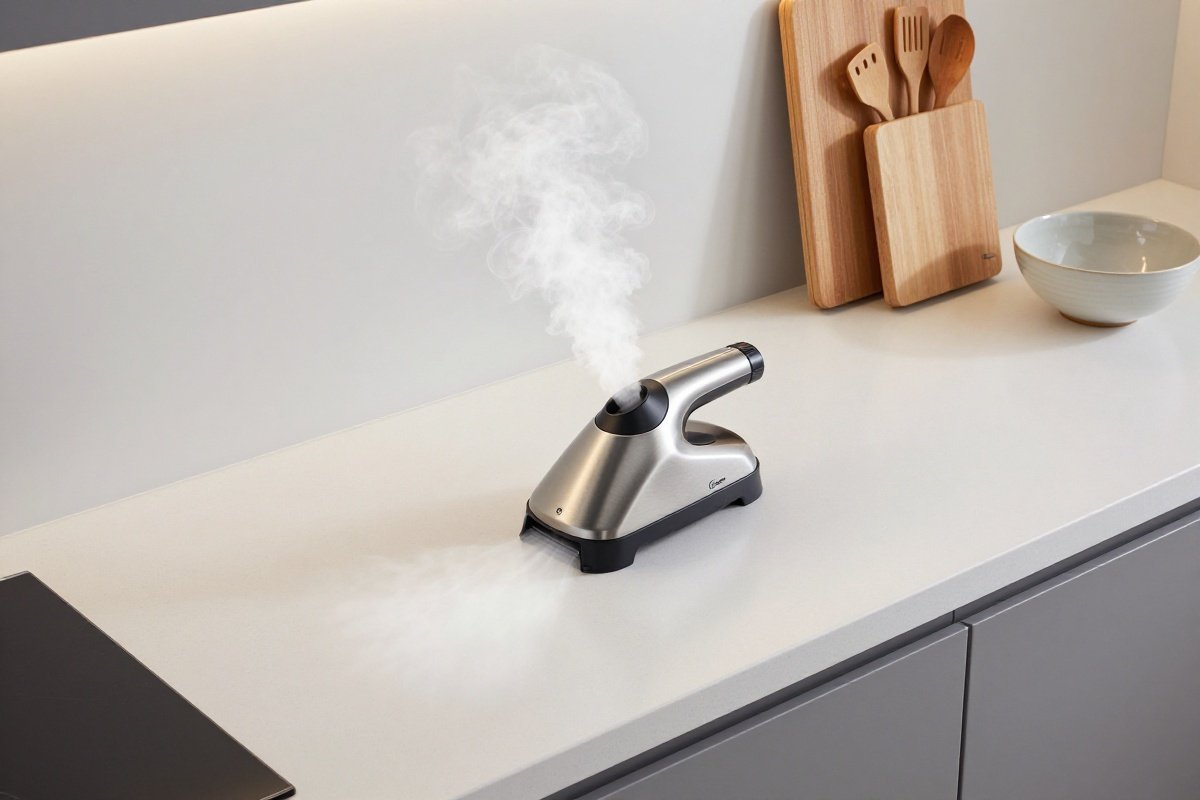
Pistol-shaped, 3 to 5 lbs, tiny tank of 6 to 12 oz giving you 5 to 10 minutes. Good for grout lines, taps, hobs and spot jobs. Useless for floors.
Handhelds are the type we’d steer most people away from buying on their own. The runtime is too short for anything satisfying, and a convertible mop covers the same ground. Which brings us to the fourth option that isn’t quite its own category.
Convertibles and steam vacuum hybrids
Some steam mops detach into a handheld. The Bissell PowerFresh Slim 2075A is our pick of the convertibles: 12.8 oz tank, 25 minutes of steam, 30-second heat-up, and it takes an extension wand for above-floor work. One machine, two of the three types.
Steam vacuum hybrids are different, and you need to understand them before you spend money. Machines like the Bissell CrossWave HydroSteam Plus vacuum and wash in one pass with steam assistance, and they’re genuinely good at that job. But the CrossWave applies steam at around 120°F, well under boiling. That’s warm-water help for a wet vacuum, not thermal sanitising, and it shouldn’t be bought as a substitute for a real steam cleaner. If a one-pass wet vacuum is what you’re actually after, our steam mop vs wet dry vacuum comparison is the relevant read.
| Handheld | Steam mop | Canister | |
|---|---|---|---|
| Tank | 6-12 oz | 12-20 oz | 48-54 oz |
| Runtime | 5-10 min | 15-25 min | 50-90 min |
| Heat-up | 30-60 sec | 30 sec | 8-12 min |
| Weight | 3-5 lbs | 5-8 lbs | 9-11 lbs |
| Does | Spots | Floors | Everything |
Can you steam clean every floor in the house?
No, and the dividing line is whether the floor is sealed.
Steam is safe on sealed tile, ceramic, porcelain, sealed stone, vinyl, linoleum and grout. Those surfaces have no route for moisture to get underneath, so heat goes in and comes back out. Grout in particular is the thing steam is best at, because the porosity that traps dirt also lets steam reach it.
Sealed hardwood is a qualified yes. Use the lowest steam setting, keep moving, and don’t go over the same board twice. The seal is what protects the timber, and a worn seal in a doorway or in front of the sink is exactly where the moisture gets in. Test how good yours is: put a few drops of water on the floor and wait ten minutes. If it beads, the seal is intact. If it darkens the wood or soaks in, don’t steam that floor. Our guide to the best steam mop for hardwood floors goes deeper on the technique.
Laminate is where we’d tell you to check the warranty first. Some manufacturers permit steam, plenty void the warranty over it, and the failure mode is swelling at the joints that you can’t undo. Laminate is a photograph of wood bonded to fibreboard, and fibreboard swells when it gets wet. Once an edge has lifted, the plank is finished.
Luxury vinyl plank and sheet vinyl are steam-safe on low to medium settings, and they’re arguably the ideal steam floor: fully waterproof, no seams for moisture to exploit, no finish to strip. Go easy anyway on glue-down vinyl, because sustained heat can soften the adhesive underneath.
Natural stone splits by whether it’s sealed and by how soft it is. Sealed granite, slate and porcelain handle steam without complaint. Marble and limestone are more porous and softer, so they take steam but not repeated aggressive passes, and a stripped sealer on marble shows up as dulling long before it shows up as damage. Reseal stone on the schedule the manufacturer gives you and steam is a non-issue.
Polished or sealed concrete is fine, and steam is genuinely good on it. Bare concrete is porous enough that you’re just making it damp.
Here’s the rule that covers all of it: if water sitting on the surface for ten minutes would worry you, steam will too. For tile and grout specifically, we have a dedicated guide to the best steam cleaners for tile floors.
What can’t you steam clean?
Unsealed wood, first and worst. Moisture penetrates raw timber and warps it, and there’s no fixing that.
The rest of the list:
- Unglazed tile. Porous, so it holds the moisture rather than shedding it.
- Waxed floors. Heat strips wax. You’ll take the finish off.
- Cold glass. Thermal shock cracks windows and shower doors. Warm the glass gradually or leave it.
- Silk, velvet and antique fabrics. Heat and moisture together will mark them.
- Anything electrical. Outlets, appliance internals, electronics. Obvious, but people do it.
- Freshly painted surfaces. Steam bubbles paint that hasn’t fully cured.
- Paper and cardboard. Self-explanatory.
Test somewhere hidden when you’re not sure. Skirting board behind a door, a corner under the sofa, the bit of countertop nobody sees.
Does steam actually sanitise?
Yes, with a caveat that matters more than the marketing admits.
The mechanism is real. Above 212°F, steam denatures bacterial proteins and kills dust mites along with the allergenic waste they leave in mattresses and upholstery. For a household with asthma or a dust mite allergy, that’s something no chemical spray does as well, and it’s the single best argument for owning one of these.
The caveat is contact time and temperature at the surface, not at the boiler. Steam leaves a canister at 275°F on the Dupray Neat and arrives on the tile considerably cooler, and a fast pass doesn’t hold it there. If you’re steaming a mattress or a bathroom floor for hygiene rather than appearance, slow right down. Ten seconds on a spot does more than three quick passes.
This is also why maximum temperature is the spec worth paying for. A machine running at 200°F has less margin than one running at 275°F once you account for the drop between nozzle and surface. For bed bug treatment specifically, where the target temperature has to actually reach the insect and its eggs, that margin is the whole game. See our guide on steam cleaners for bed bugs.
Dust mites are the everyday version of the same argument. They live in mattresses, sofas and rugs, they feed on shed skin, and it’s their waste rather than the mite that triggers symptoms. Washing bedding hot enough kills them; nothing you spray on a mattress does. Steam reaches into the surface layer where they live, which is why an upholstery attachment and ten slow minutes on each side of a mattress is the single most useful thing most people will do with one of these machines. Our guide on getting rid of dust mites covers the rest of the routine.
One thing steam won’t do is sterilise. Sanitising reduces the microbial population sharply; sterilising eliminates it, and that takes sustained pressurised heat of the kind an autoclave produces. Nobody’s kitchen floor needs sterilising, but the distinction matters if you’re steaming somewhere it genuinely counts, like a food prep surface after raw chicken. Steam, then wipe, then let it dry.
How to steam clean without wrecking the floor
Vacuum first. We said it above and it’s the mistake everyone makes. Steam turns loose dust into mud and then you’re spreading it.
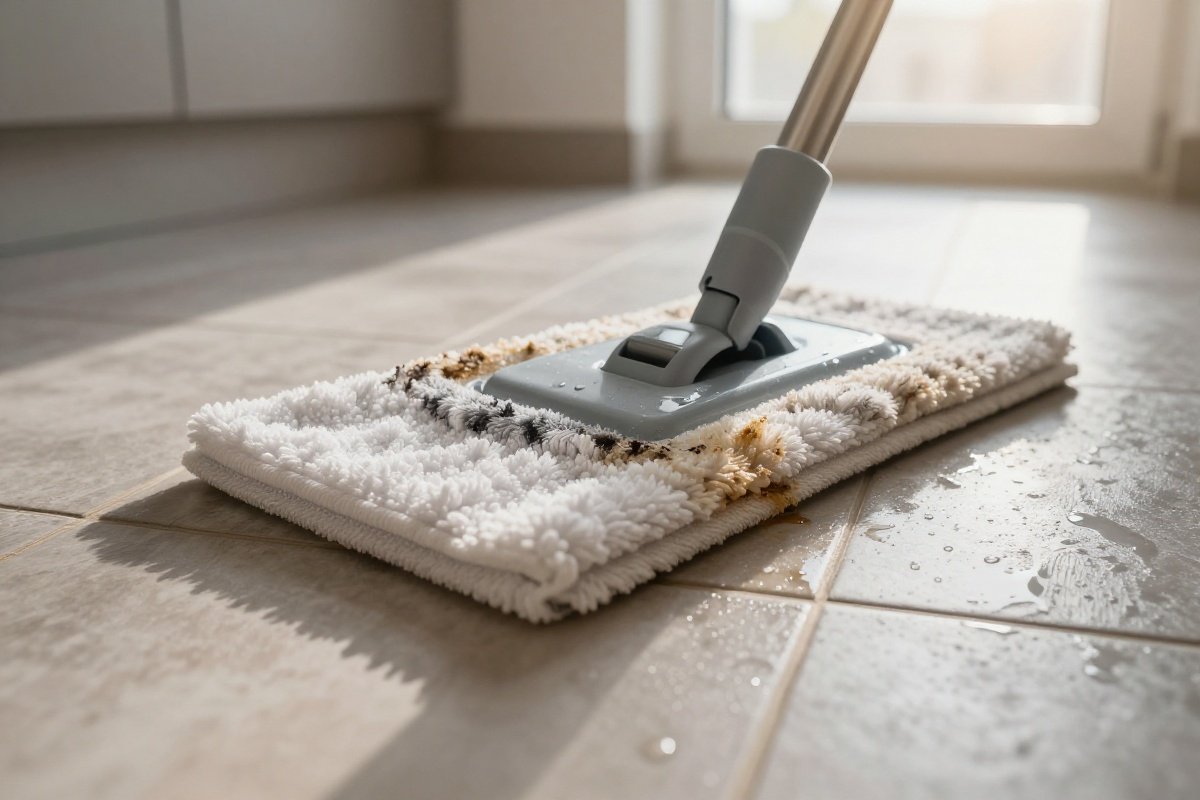
On stubborn grout and baked-on grease, work in two passes. First pass lays steam down and loosens things. Wait 30 seconds for the heat to get in. Second pass with a brush attachment takes the loosened material away. Trying to do it in one go with more pressure doesn’t work; steam does the job, not your shoulders.
Keep spare pads. Three or four, so you can swap the moment one looks grey rather than pushing dirt around for the last third of the room. Overlapping passes in a consistent pattern, working backwards out of the room so you’re not walking on damp floor.
A few things that shorten a machine’s life:
- Leaving water in the tank. Empty it after every use. Standing water scales the boiler and grows things.
- Adding cleaning solution. Almost every machine here is water-only. Detergent damages internals and voids warranties.
- Starting before it’s ready. Wait for the indicator. Weak steam cleans badly and you’ll blame the machine.
- Ignoring falling steam output. That’s scale. Descale with equal parts white vinegar and water: fill, heat, run steam through for two minutes, leave 30 minutes, empty, flush with clean water.
Which specs actually matter?
Four, and they’re not the ones on the front of the box.
Maximum steam temperature is the one to lead on. Anything at or above 200°F cleans well. Above 250°F you get real sanitising margin and the ability to shift grease that lower temperatures only soften. The Dupray Neat’s 275°F is the highest here; the McCulloch MC1375’s 200°F is the practical floor.
Runtime per fill decides whether cleaning is a job or an errand. Steam mops give you 15 to 25 minutes, which covers a kitchen and a bathroom. Canisters give you 50 to 90, which covers a house. Running out mid-room is how a machine ends up in the back of a cupboard.
Heat-up time is the spec that quietly determines how often you use it. Thirty seconds means you’ll steam a spill. Ten minutes means you won’t, and you’ll wait for a proper session instead. Both are fine, but be honest about which sort of person you are before spending canister money.
Steam pressure, measured in PSI, only matters if grout and upholstery are on your list. Higher pressure drives steam into porous surfaces rather than sitting on top of them. Fifty PSI on the Dupray and 58 on the McCulloch are both plenty. Steam mops don’t publish a figure because there isn’t meaningful pressure behind a pad.
Tank capacity gets marketed hard and tells you less than runtime does, because a bigger tank on a thirstier boiler buys you nothing. Read the minutes, not the ounces.
Is a steam cleaner actually worth buying?
For most households, yes, but for a narrower reason than the marketing gives you.
Buy one if you have sealed hard floors and a reason to care about sanitising: a crawling toddler, a dust mite allergy, asthma in the house, pets on the furniture. Steam does something in those cases that a mop and a bottle of floor cleaner genuinely cannot, and it does it without leaving residue on the surfaces the problem is on.
Skip it if your house is mostly carpet. Steam mops don’t clean carpet, and the carpet glider attachments that ship with some of them refresh fibres rather than cleaning them. You want a carpet cleaner for that job, which is a different machine solving a different problem.
The money question is smaller than people expect. A capable steam mop is a modest spend, and a canister that will do the whole house sits in the same bracket as a mid-range vacuum. What you’re actually buying is the elimination of a shelf of cleaning products, so the running cost trends toward the price of water and the occasional replacement pad.
The honest downside is that it’s another machine to store, descale and eventually repair. If a mop and a bucket already keep your floors the way you want them, steam is an upgrade rather than a fix.
Which home steam cleaner should you buy?
Dupray Neat Steam Cleaner - best canister
The hottest machine here at 275°F, verified on Dupray’s own spec sheet, with 50 PSI of pressure and 50 minutes of runtime from a 54 oz boiler. The 17-piece accessory kit covers floors, grout, windows and upholstery.
It’s 9 lbs with a 16-foot cord and a 2-year warranty, and the stainless boiler is the reason we’d expect it to outlast the plastic-tank competition. The 8-minute heat-up is the price of that temperature.
Buy it if sanitising is the actual goal rather than a bonus.
McCulloch MC1375 Canister Steam Cleaner - best value canister
Ninety minutes of continuous steam from a 48 oz tank, 58 PSI, and 20 accessories, for meaningfully less than the Dupray. Steam temperature is 200°F rather than 275°F, and heat-up is 10 to 12 minutes.
Eighteen feet of cord and a 7-foot hose means you cover a room without hunting for a socket. At 11 lbs it’s the heaviest thing here.
If you want canister versatility and don’t need the Dupray’s temperature, this is the better-value buy.
Bissell PowerFresh Slim Steam Mop 2075A - best if you want one machine
A steam mop that converts to a handheld with an extension wand, which covers two of the three types for one purchase. Tank is 12.8 oz giving about 25 minutes, heat-up is 30 seconds, and there are three steam levels.
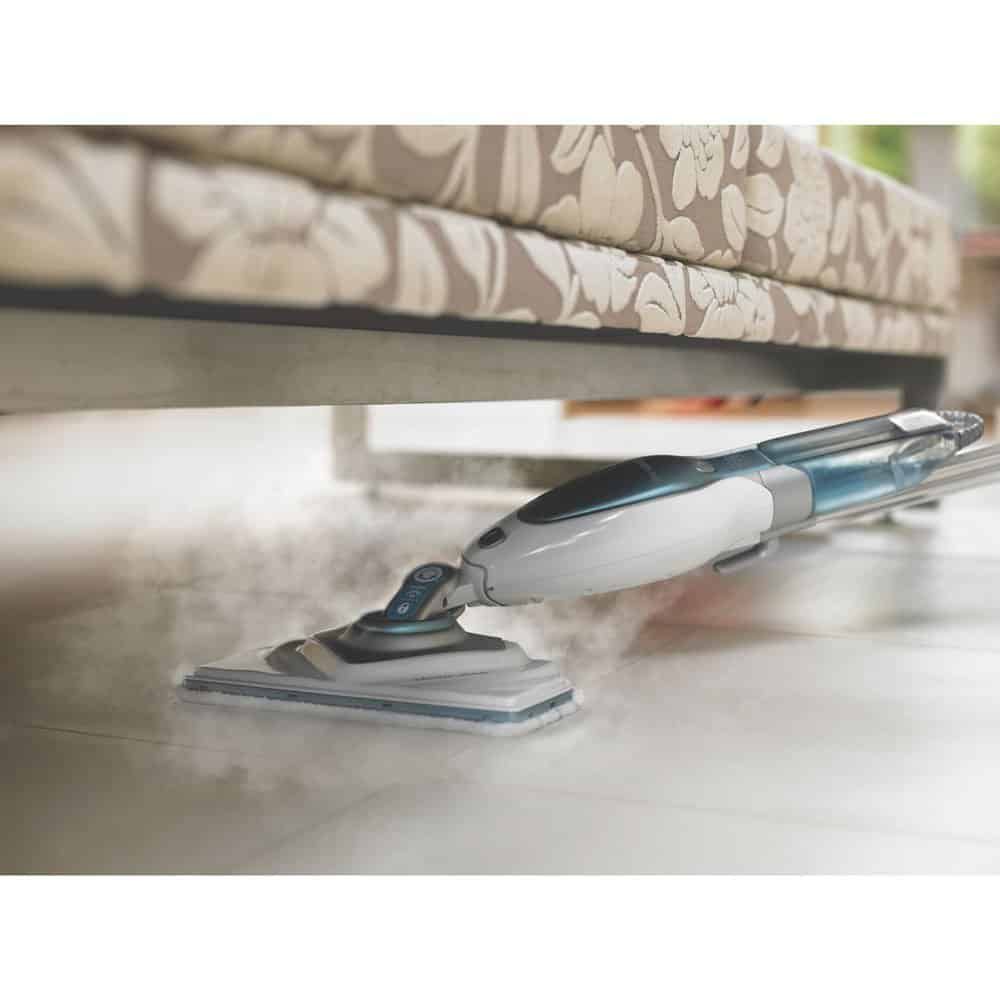
At 6.5 lbs with a 23-foot cord it handles floors properly, and the slim head is built to get under furniture that a bulkier mop won’t. The small tank is the compromise you accept for the handheld mode.
Bissell PowerFresh Steam Mop 1940 - best steam mop
Six point two pounds, 16 oz tank, ready in 30 seconds, three steam settings, 23-foot cord. It does floors and it does them well, and there’s nothing else to say about it.
The three settings matter more than they sound. Low is what makes it usable on sealed hardwood; high is what gets kitchen tile clean.
Shark Steam Pocket Mop S3501 - best lightweight
Under 5 lbs, 11.7 oz tank, 30-second heat-up, 18-foot cord, 10-inch head. The double-sided pads are the good idea here: flip rather than swap, so one pad does a bigger area.
The tank is the smallest of the mops, so a whole floor of tile means a refill. For a flat or a house where you’re carrying the thing up and down stairs, the weight wins.
Looking after it
Empty the tank, wipe it down, let it cool before it goes in the cupboard. Wash attachments in soapy water when they start looking grim. Descale monthly if you’re using it weekly, more often if your water is hard.
When output drops, it’s scale nine times out of ten, and descaling fixes it. If it doesn’t, check for a kinked hose or a perished seal before you assume the element has gone. Leaks are usually a tank cap that isn’t seated. Spitting and sputtering usually means the tank was overfilled.
None of that is much work, and a steam cleaner that gets descaled will outlast three that don’t.
Further Reading
- Steam Mop vs Steam Cleaner: What’s the Difference?
- Best Steam Cleaners 2026: Top Picks for Every Floor
- How to Get Rid of Dust Mites in 4 Easy Steps
- The Importance of Vacuum Cleaner Maintenance
Recommended Products
Dupray Neat Steam Cleaner
Best canisterThe hottest steam of anything here at 275°F, with 50 minutes of it per fill.
What We Like
- 275°F max temperature provides effective sanitization
- 50 minute runtime from large 54 oz tank
- No chemicals needed - uses only water
- Includes 18 versatile accessories for various surfaces
- Compact and portable design
What We Don't
- Premium price point
- 8 minute heat-up time before use
- Shorter cord compared to some competitors
McCulloch MC1375 Canister Steam Cleaner
Best value canisterNinety minutes of runtime and 20 accessories, at well under the Dupray's money.
What We Like
- 90-minute continuous steam from a 48 oz tank
- 20 accessories included
- Variable steam control up to 58 PSI
- Chemical-free cleaning with water heated to over 200°F
What We Don't
- 10-minute heat-up before steam is ready
- Canister and hose are bulkier than a steam mop or handheld
Bissell PowerFresh Slim Steam Mop 2075A
Best if you want one machineConverts from floor mop to handheld, which covers two of the three types.
What We Like
- Detachable handheld steamer for counters, appliances and grout
- Steam trigger plus low and high SmartSet steam settings
- 30-second heat-up, per Bissell's user guide
- 25-foot power cord and a 13-inch cleaning path
What We Don't
- Small 11.8 oz clean tank means frequent refills
- Doesn't stand up on its own without the wall mount
- Handheld mode can be awkward for extended use
Bissell PowerFresh Steam Mop 1940
Best steam mopThirty-second heat-up and three steam levels. Floors only, and that's the point.
What We Like
- Ready in 30 seconds
- Built-in Easy Scrubber for tough spots
- Spring Breeze fragrance discs included
- Three steam settings for different floor types
What We Don't
- Small 16 oz water tank requires frequent refills
- Steam mop only - no vacuum function
- Spring Breeze fragrance discs are a recurring consumable cost
Shark Steam Pocket Mop S3501
Best lightweight steam mopUnder 5 lbs with double-sided pads, for people who hate carrying things upstairs.
What We Like
- Double-sided microfiber pads for extended cleaning without flipping
- 99.9% sanitization without chemicals
- Lightweight at 4.9 lbs for easy maneuverability
- Simple operation with quick 30-second heat-up
What We Don't
- Basic model with fewer features than newer versions
- Shorter 18-foot cord limits reach in large rooms
- Manual steam control - no automatic adjustment
Sources & Research
- Amazon Product Page
- Dupray Official Product Page
- Amazon Product Page
- McCulloch MC1375 Canister Steam Cleaner product page
- Amazon Product Page
- Bissell PowerFresh Slim 3-in-1 Scrubbing & Sanitizing Steam Mop product page (2075A)
- Bissell 2075 Series User Guide
- Amazon Product Page
- Bissell PowerFresh steam mops category page
- Bissell PowerFresh Scrubbing & Sanitizing Steam Mop product page (1940A)
- Amazon Product Page
- Shark Official Product Page
- Shark Official Website
Continue Reading
Explore more steam cleaners content or browse our other categories.
Frequently Asked Questions
- What surfaces can I safely steam clean?
- Sealed hard surfaces. Tile, ceramic, porcelain, vinyl, linoleum, sealed hardwood, grout, most sealed stone countertops, bathroom fixtures, appliance exteriors, windows and mirrors. Upholstery and mattresses are usually fine, but check the care tag first. Steam does not belong on unsealed wood, unglazed tile, waxed floors, silk or velvet, or anything electrical.
- How hot does a home steam cleaner get?
- It depends on the type. Steam mops sit around 200°F at the pad. Canister machines run hotter, and the Dupray Neat tops the ones covered here at 275°F. Steam vacuum hybrids are the outlier. The Bissell CrossWave HydroSteam Plus applies steam at about 120°F, which is warm water assistance rather than thermal sanitising.
- Do steam cleaners kill germs without chemicals?
- Heat above the boiling point of water denatures the proteins that bacteria and dust mites are built from, so yes, hot steam sanitises on contact. The catch is contact time. A pad moving quickly over a floor cools on impact and doesn't hold the surface at temperature for long, so treat the manufacturer's 99.9% figures as lab conditions rather than a normal mopping run.
- Can I use tap water in a steam cleaner?
- Usually yes, but distilled water is better and some models require it. Tap water leaves mineral scale inside the boiler, which chokes steam output and lengthens heat-up over time. If your water is hard, use distilled regardless of what the manual permits. It's cheaper than a new boiler.
- What's the difference between a steam mop and a steam cleaner?
- A steam mop is a steam cleaner built for one job. It has a flat head, a small tank and a microfibre pad, and it does floors. A canister steam cleaner is a boiler on wheels with a hose and attachments, so it does floors plus grout, appliances, upholstery, windows and car interiors. Mops are easier. Canisters are more useful.
Written By
Home Vacuum Zone
Our team researches vacuum cleaners against published specifications and independent lab results to help you make confident buying decisions.
Related Articles
Best Steam Cleaners 2026: Top Picks for Every Floor
We compared the top steam cleaners of 2026 across hard floors, tile, and grout. Ranked picks from Bissell, Dupray, Tineco, and McCulloch on published specs.
Best Steam Cleaners for Tile Floors and Grout (2026 Guide)
Find the best steam cleaners for tile floors and grout in 2026. Top picks from Bissell, Tineco, and Dupray for deep cleaning ceramic, porcelain, and natural stone tile.
Steam Mop vs Steam Cleaner: What's the Difference?
Steam mop vs steam cleaner: what's the difference and which do you need? We compare features, cleaning power, price, and best use cases for each type.