Affiliate Disclosure:Home Vacuum Zone is reader-supported. When you buy through links on our site, we may earn an affiliate commission at no additional cost to you. This does not influence our reviews or recommendations — we only recommend products we genuinely believe in.
A quality vacuum cleaner is an investment in your home’s cleanliness and your family’s health. But how long should you realistically expect that investment to last? The answer varies dramatically based on brand quality, vacuum type, usage patterns, and maintenance habits.
Quick Answer: Consumer Reports’ reliability survey puts the median vacuum at eight years and says the figure varies widely by brand, but we couldn’t find per-brand lifespans in years published anywhere, so the neat per-brand figures in circulation aren’t research. What manufacturers do publish is warranty length, parts availability and, in two cases, endurance testing. Miele is the only brand that converts its testing into years, and it does so under a stated usage assumption.
2026 Vacuum Longevity Research
Consumer Reports reliability survey data puts the median vacuum at eight years, and CR notes that the number varies widely by brand. Its public summary doesn’t split that figure by type, so claims that corded machines outlast cordless ones by a set number of years aren’t coming from this survey. Battery-powered stick vacuums and robots add a wear part the corded ones don’t have. Humidity, dust and how a machine is stored affect every type.
Warranties and Durability Claims by Brand
A warranty is what a maker commits to in writing, so that’s what the table compares, alongside any durability testing the brand publishes. Warranty terms are US terms.
| Brand | Type | Published warranty | What the maker publishes about durability |
|---|---|---|---|
| Miele | Canister/Upright | 1 to 3 years by series, 5 on HomeCare sub-models | Endurance-tests named mains-operated bagged series to the equivalent of 20 years of average use, defined as 750 hours, or 45 minutes a week |
| SEBO | Canister/Upright | 7 years motor, 5 years non-wear parts and labour, lifetime belts on AUTOMATIC X | No testing figures found; says its vacuums are “built to last” |
| Riccar | Upright/Canister | Varies by model, 90 days to 10 years | No testing figures found |
| Dyson | Cordless/Upright | 2 years cordless, 5 years corded | 5+ years of testing, 20,000 motor hours, 1,000km of push-pull tests, 6,000 battery cycles. No figure in years |
| Shark | Upright/Stick | Not verified here | Nothing found |
| Bissell | Various | Not verified here | Nothing found |
| Hoover | Various | Not verified here | Nothing found |
| Tineco | Cordless | Not verified here | Not checked |
Sources: Miele’s US limited warranty (printed in its canister operating instructions, effective August 2023), SEBO’s warranty FAQ, Riccar’s warranty table, Dyson’s limited warranty and Dyson’s testing figures.
Premium Brands: What They Actually Commit To
Miele: The 20-Year Test, and What It Isn’t
Miele is the one brand here that turns its durability testing into years. During development of its mains-operated series, including the Classic C1, Compact C1 and C2, Complete C2 and C3, and Guard S1, M1 and L1, Miele runs test machines for 750 hours. That’s its figure for 45 minutes a week, 50 weeks a year, over 20 years, and Fraunhofer-Institut reviewed the test concept.
Read the fine print, though. Miele’s legal notice says the test doesn’t represent any assurance or guarantee of 20 years’ durability, and that individual machines may still need servicing or core parts replaced. Usage matters too: at 90 minutes a week, the same 750 hours covers ten years, not 20.
The warranty is far shorter. Miele’s US limited warranty runs from one year on the Classic series to three on the Complete, Dynamic and Blizzard series, with five on HomeCare sub-models. We couldn’t find the Guard series’ term in that document. Consumer Reports does list Miele among the less trouble-prone canister brands.
SEBO: Seven Years on the Motor
SEBO’s US warranty is seven years on the motor and five on non-wear parts and labour, and its AUTOMATIC X uprights get lifetime cover on the drive belts. According to its warranty FAQ, SEBO has built vacuums for the commercial cleaning industry for more than 30 years and has sold into the US household market since 1997.
Several features SEBO lists on its US site exist to protect the machine:
- Clog and full-bag light with automatic shut-off
- Worn brush indicator
- Timing-belt-driven brush with clutch protection
- Easy brush roller removal for cleaning
Riccar: Check the Model Number
Riccar’s warranty depends entirely on which model you buy. It runs from 90 days on the Gem to ten years on the R17 Ultra Lightweight, and the R25 Clean Air line alone spans two to five years across its three trims. Designated models also carry a lifetime warranty on the belts.
Mid-Range Brands: The Sweet Spot
Dyson: Innovation with Limitations
Dyson publishes how hard it tests rather than how long its machines last. Its engineering page describes at least five years of testing, over 1,000km of push-pull tests, 500,000 swivel tests on the cleaner-head joint, batteries charged and discharged more than 6,000 times, and motors run for over 20,000 hours. None of that converts to a figure in years, and Dyson’s own battery care page says battery life isn’t defined by a set number of years.
The warranty is two years on cordless vacuums and five on corded ones in the US. It excludes “reduction in battery discharge time due to battery age or use”, so a fading battery on a cordless Dyson is your cost, not Dyson’s.
Dyson’s own battery advice:
- Use Auto or Normal mode for everyday cleaning; constant Boost or Max use speeds up battery degradation
- Keep it out of hot rooms, direct sun and cold garages
- Store it at room temperature (Dyson says 18-28°C, roughly 64-82°F), away from radiators
- Let the machine cool before putting it back on the charger
- Run the battery down to empty at least once a month
Shark: Value-Oriented Performance
Consumer Reports names Shark, alongside Kirby, among the more reliable upright brands in its reliability survey. We couldn’t read Shark’s warranty terms on Shark’s own site for this guide, so check the manual or the listing for the exact model before you buy rather than trusting a brand-wide figure.
Budget Brands: Managing Expectations
Bissell and Hoover: Affordable Options
Budget-friendly brands prioritize accessibility over longevity. While these vacuums provide adequate cleaning performance, their plastic construction and sealed motors limit repair options and overall lifespan.
Typical Lifespan Factors:
- Non-replaceable brush rolls with plastic bearings wear faster
- Bagless designs with non-serviceable cyclone components
- Thermal cutoff switches that may fail after repeated activation
- Parts availability that varies by model, so check before you buy
However, these brands excel at providing accessible cleaning solutions for renters, small spaces, or households needing secondary vacuums for occasional use. If you’re on a tight budget, you might also consider buying a refurbished vacuum cleaner from a premium brand.
Vacuum Type and Longevity
Canister Vacuums
You’ll often read that canisters outlast uprights. We couldn’t find survey data that shows it, and Consumer Reports’ public summary doesn’t split its median by type. What’s true is that most of Miele’s endurance-tested series are canisters. Before buying one of the canister vacuums on the market, check the warranty term and whether the maker still sells parts for older models; those are the durability signals you can check.
Upright Vacuums
Uprights carry the motor and brush roll in one body that takes the knocks. Belt-driven models need a new belt now and then, which is a cheap part, and it’s the first thing Consumer Reports suggests checking before you give up on a dead machine.
Cordless Stick Vacuums: Battery-Limited Lifespan
On a cordless machine the battery is the wear part. Dyson, for one, excludes battery fade from its warranty. Before you buy, check whether the maker sells replacement packs for that model and whether you can swap one without tools, because that decides whether a tired battery means a new pack or a new vacuum.
Robot Vacuums: Technology-Driven Obsolescence
Robot vacuums face longevity problems a stick vacuum doesn’t:
- Battery degradation, as with any cordless machine
- Software support ending for older models
- Component wear from autonomous navigation and impact
- App and navigation features that date quickly
A robot can still run mechanically and get replaced anyway, because the app stops being supported or newer navigation makes it look slow.
Signs Your Vacuum is Nearing End of Life
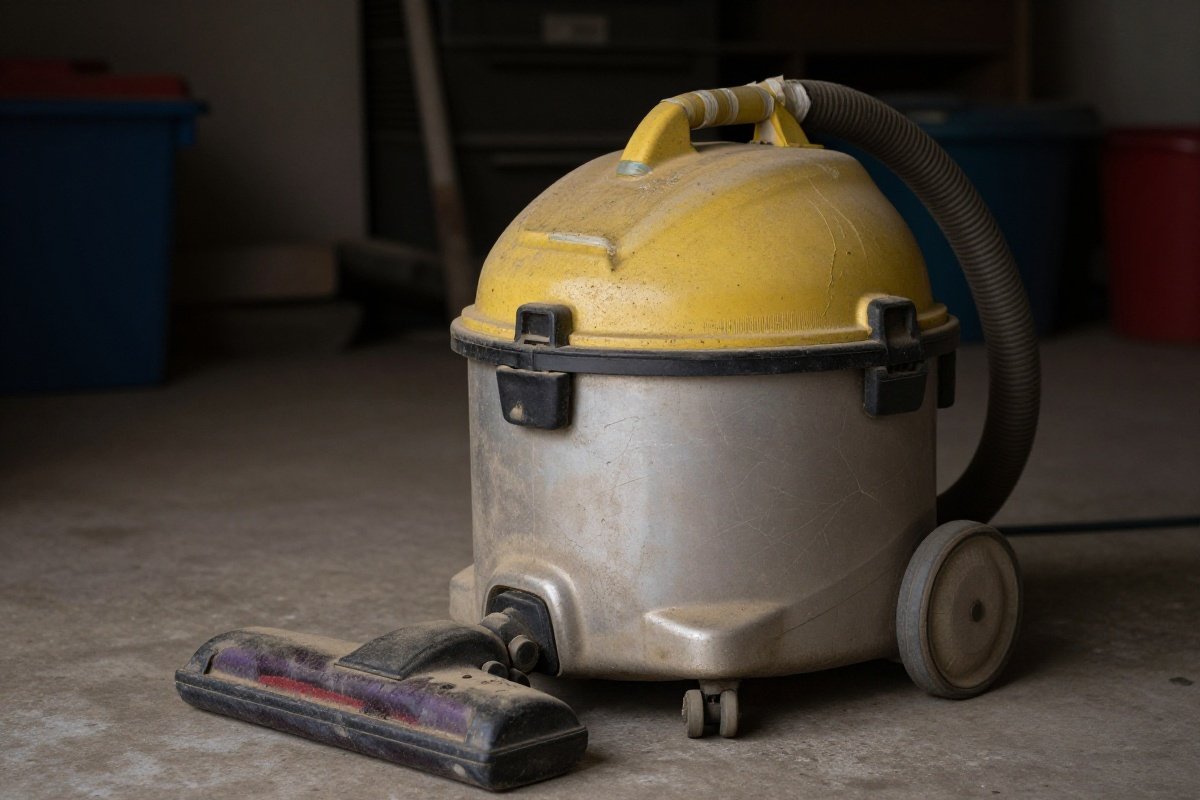
Recognizing these warning signs helps you plan replacement before complete failure. Key diagnostic indicators include loss of suction power even with clean filters and empty bins, unusual noises like grinding or squealing from the motor or brush roll, visibly worn bristles on the brush roll that no longer agitate carpet effectively, and broken or cracked parts that affect functionality or safety.
Performance Indicators
- Reduced suction despite clean filters and empty bins
- Overheating during normal use
- Unusual noises including grinding, squealing, or excessive vibration
- Burning smell indicating motor strain or electrical issues
- Inconsistent brush roll speed or complete failure to rotate
Structural Indicators
- Cracked housing or broken wheels affecting maneuverability
- Hose leaks reducing suction efficiency
- Electrical cord damage or intermittent power loss
- Attachment clips that no longer secure properly
Economic Indicators
When repair estimates exceed 50% of replacement cost, replacement becomes the more economical choice. For example, a mid-range vacuum requiring repairs costing more than half its replacement value should generally be replaced, while a premium Miele with moderate maintenance represents reasonable lifecycle costs.
Maintenance Habits That Extend Vacuum Life
Vacuum cleaner maintenance is the part of a vacuum’s lifespan you control. These habits apply regardless of brand or price point:
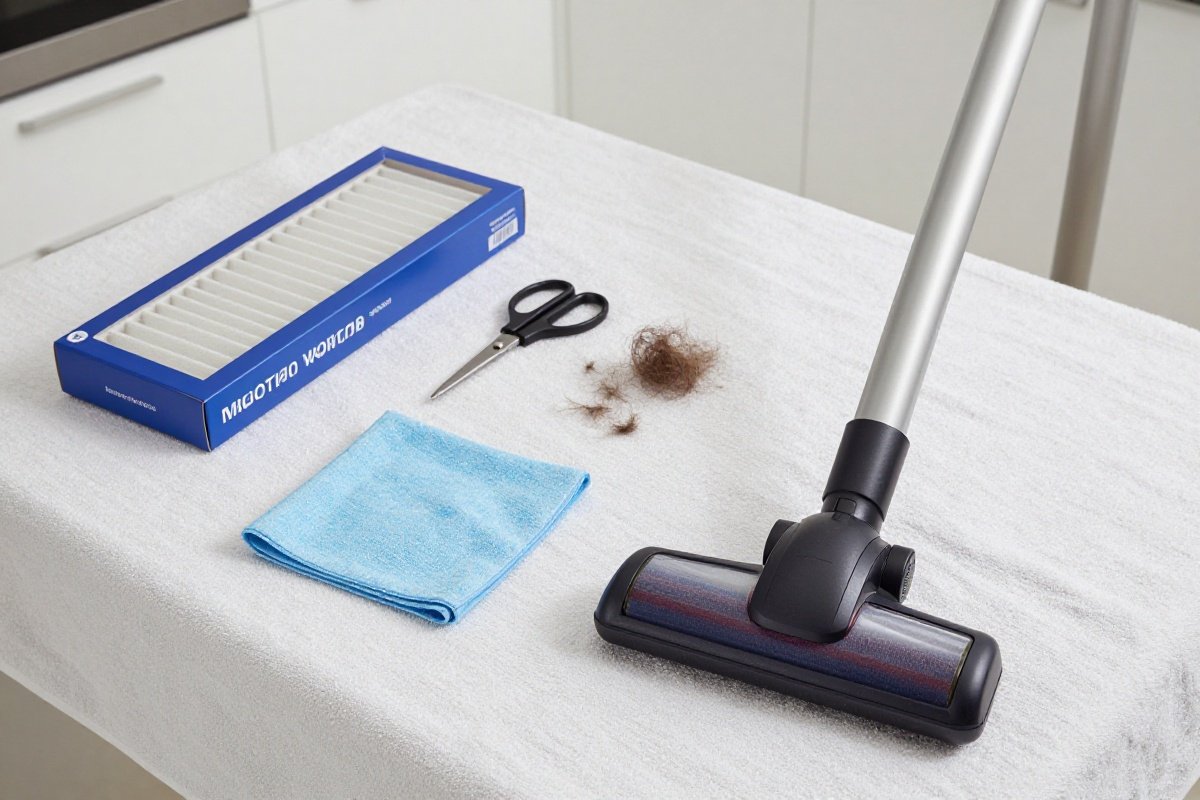
Regular Maintenance (Monthly)
- Empty bag or bin before reaching maximum capacity
- Clean or replace filters according to manufacturer schedule
- Remove hair and debris from brush rolls
- Check hose and attachments for blockages
Deep Maintenance (Quarterly)
- Wash washable filters and allow complete drying
- Inspect belts for wear and proper tension
- Clean brush roll bearings and remove wrapped hair
- Check seals and gaskets for damage
Annual Maintenance
- Professional servicing for premium vacuums (Miele, SEBO)
- Motor inspection for corded models over 5 years old
- Electrical cord examination for damage
- Attachment and accessory functionality testing
The Repair vs. Replace Decision
When to Repair
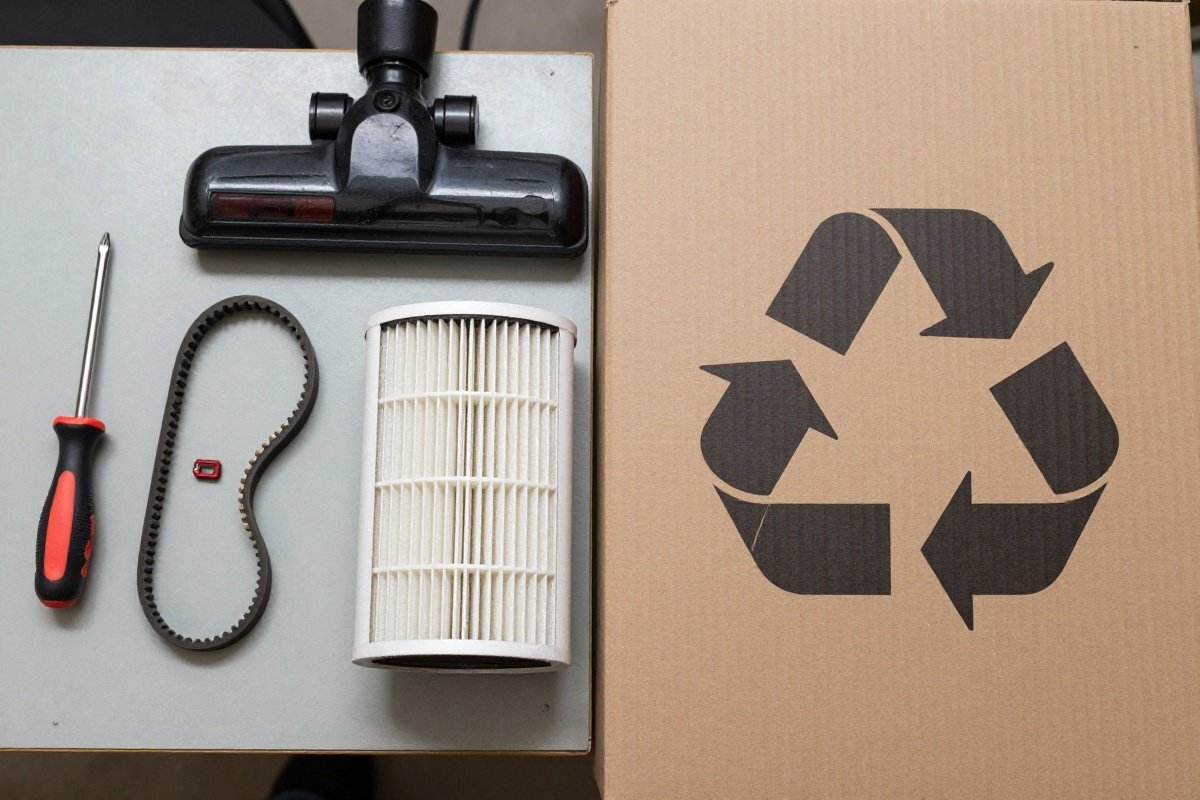
For step-by-step guidance on common fixes, see our vacuum repair DIY guide.
- Under warranty (obvious choice for covered defects)
- Minor component failure (belts, filters, brush rolls)
- Premium vacuum with accessible parts and service network
- Sentimental value or discontinued model with proven reliability
When to Replace
- Multiple component failures indicating systemic wear
- Repair costs exceeding 50% of replacement price
- Obsolete technology lacking modern features or filtration - use our vacuum buying guide to find a replacement
- Safety concerns including electrical hazards or motor issues
Cost-Per-Year Analysis: The True Value Equation
Divide the price by the years you expect to get, and anchor that number to the warranty rather than a brochure or a lifespan table. A machine with a one-year warranty and one with seven years on the motor aren’t making the same promise, even if they clean the same on day one.
Then add what it costs to keep running: bags, filters, belts and, on a cordless, at least one replacement battery. Consumables can close or widen the gap between a budget machine and a premium one, so price them before you decide the expensive vacuum is the cheap one in the long run.
Further Reading
- Shark vs Bissell Vacuums: Which Brand is Better? (2026 Comparison)
- Best Vacuums Under $200 in 2026
- Shark vs Dyson 2026: Which Vacuum Brand is Best?
Environmental Considerations
Vacuum longevity directly impacts environmental footprint:
- Longer lifespan reduces manufacturing and disposal impact
- Repairable design extends usefulness and reduces waste
- Quality filtration maintains air quality throughout product life
- Bagged vs. bagless considerations for ongoing consumables
Before you buy, check whether the maker sells spare parts and has an authorised repair network. SEBO and Riccar both route warranty repairs through authorised dealers, which is what lets a machine be repaired rather than replaced.
Recommended Products
Dyson V15 Detect
Tech enthusiasts and medium-sized homesDyson's cordless flagship, covered by the 2-year US limited warranty Dyson gives all its cordless vacuums. That warranty excludes battery run time lost to age or use, so the pack is yours to replace.
What We Like
- Laser reveals microscopic dust on hard floors
- Piezo sensor counts particles and displays in real-time
- Anti-tangle Motorbar cleaner head prevents hair wrap
- Powerful 240 AW suction with auto-adjusting power
What We Don't
- 60-minute runtime only in Eco mode (8 min in Boost)
- Small 0.2-gallon dustbin requires frequent emptying
- Premium price point
- 4.5-hour charging time is lengthy
Shark Navigator Lift-Away NV352
Budget-conscious families and pet ownersOutstanding value vacuum that consistently outperforms its price point. With proper maintenance, expect 5-7 years of reliable service.
What We Like
- Lift-away feature for versatile cleaning of stairs and furniture
- Anti-allergen complete seal traps 99.9% of dust and allergens
- Budget-friendly price point
- Strong suction power on carpets and hard floors
What We Don't
- Heavier than some competitors at 12.5 lbs
- Can be top-heavy when using lift-away mode
- Corded design limits mobility range
Miele Guard L1 Bagged Canister Vacuum
Buyers who want published durability testingThe Guard series is one of the Miele lines endurance-tested to the equivalent of 20 years of average household use, which Miele defines as 750 hours of running. Miele states plainly that this isn't a guarantee of 20 years' durability.
What We Like
- Direct successor to the Complete C3 series, which Miele discontinued in 2026
- Accepts Miele electrobrushes, so a powered floorhead can be added later
- 1200W German-engineered motor with foot-controlled power settings, so no bending to change suction
- 36 ft operating radius covers a large room without changing sockets
- 24 ft cord with one-touch automatic rewind
What We Don't
- Bagged, so HyClean Air TU bags are an ongoing cost
- Ships with the unpowered AllTeQ floorhead only; a powered brush for deep carpet is an extra purchase
- 17 lbs, and Miele rates it at 75 dB
- Too new for long-term reliability data, unlike the 15-year track record the C3 earned
Sources & Research
- Dyson official product page
- RTINGS lab test results
- Amazon Product Page
- Amazon Product Page
- Shark Official Product Page
- Shark Official Site
- Amazon product listing (manufacturer specifications)
- Miele USA, Complete C3 discontinued and replaced by Guard L1
- Miele US product data sheet, Guard L1 12811590
- Miele USA Guard L1 product page
Continue Reading
Explore more buying guides content or browse our other categories.
Frequently Asked Questions
- How long do Dyson vacuums last?
- Dyson says its battery life isn't "defined by a set number of years", and we couldn't find it putting a year figure on the machines either. What it does publish is a 2-year US limited warranty on cordless vacuums and 5 years on corded ones, plus a development programme of at least five years' testing that includes 6,000 battery charge cycles and 20,000 hours of motor running. The warranty excludes loss of battery run time from age or use.
- Which vacuum brand lasts the longest?
- We couldn't find a published ranking, so treat any brand league table with suspicion. What you can check is what each maker commits to. SEBO covers motors for seven years, and parts and labour for five. Miele endurance-tests named mains-operated series, including the Complete C3 and Guard L1, to the equivalent of 20 years of average use, which it defines as 750 hours, or 45 minutes a week, and says that isn't a durability guarantee. Riccar's warranty runs from 90 days to ten years depending on the model.
- Is it worth repairing a 5-year-old vacuum?
- Compare the repair quote with the cost of a replacement. Once a repair runs past half the price of a new machine, replacing usually makes more sense, unless it's a premium model with parts still sold for it and an authorised service network behind it.
- How often should I replace my vacuum?
- Replace vacuums when performance degrades significantly despite maintenance, repair costs exceed 50% of replacement value, or safety concerns arise. Rather than working to a fixed number of years, check whether parts are still available for your model and weigh the repair quote against the price of a replacement.
- What kills vacuums the fastest?
- Consumer Reports points at neglect: bags or bins filled to the brim, which can clog the machine; filters left dirty; hair and string wrapped round the brush, which stresses the motor; and blocked hoses. Before writing a vacuum off, check that the fault isn't something simple like a broken belt.
Written By
Home Vacuum Zone
Our team researches vacuum cleaners against published specifications and independent lab results to help you make confident buying decisions.
Related Articles

Best Vacuums for Carpet in 2026 (and What the CRI Seal Means)
The best vacuums for carpet in 2026, checked against the Carpet and Rug Institute's Seal of Approval list. One CRI Gold upright, four uncertified alternatives, and how to match a machine to your pile.
Beater Bar vs No Beater Bar: Does Your Vacuum Need One? (2026 Guide)
Learn what a beater bar is, when you need one, and the best vacuums with and without beater bars. Complete guide for carpet, hardwood, and pet hair cleaning.
6 Best Shop Vacs for Home and Workshop (2026 Reviews)
Six shop vacs for 2026 compared on published specs. Wet/dry vacuums for workshops, garages and home use from Craftsman, DeWalt, Karcher, Shop-Vac and Vacmaster.