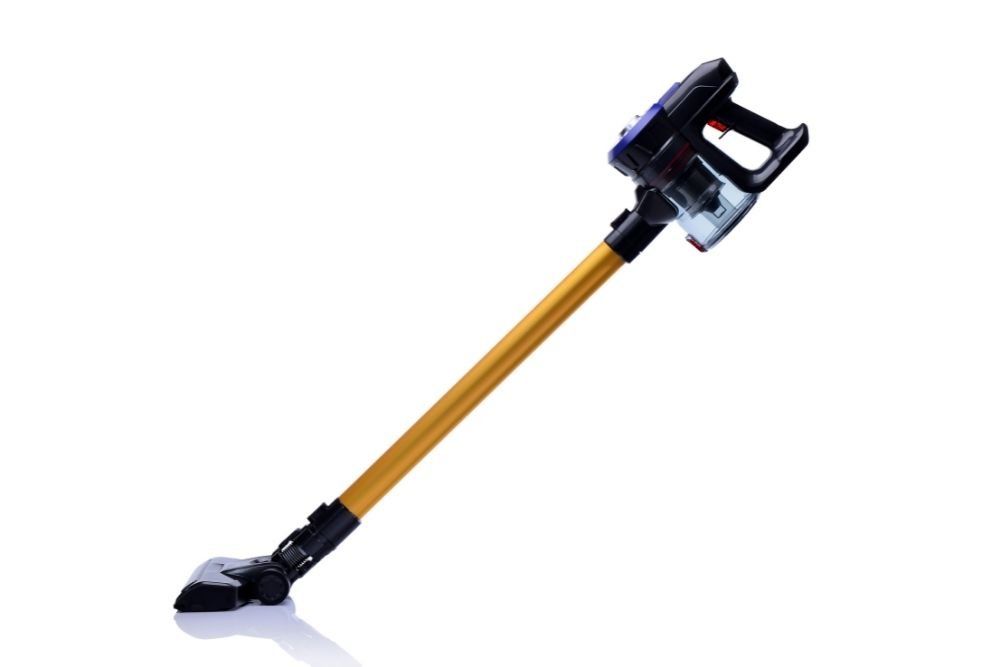
Affiliate Disclosure:Home Vacuum Zone is reader-supported. When you buy through links on our site, we may earn an affiliate commission at no additional cost to you. This does not influence our reviews or recommendations — we only recommend products we genuinely believe in.
The cordless vacuum market has two distinct categories: premium home-focused brands like Dyson, and power tool brands like Makita, Ryobi, and Milwaukee that leverage existing battery platforms. Choosing between them requires understanding fundamentally different design philosophies and use cases.
A note on Dyson’s lineup in 2026: the V15 Detect remains our headline pick for this comparison because it has the proven real-world track record. Dyson did launch the V16 Piston Animal in early 2026 with 315 AW of suction (vs the V15’s 240 AW) and a new All Floors Cones Sense head, but early TechRadar testing found mixed results against the V15 on some debris types. The V16 launched at the top of Dyson’s cordless range and prices roughly level with the V15, so cost isn’t the deciding factor between them; if you’re shopping today the V15 is still the safer pick on evidence, and we’ll revisit the V16 as more independent testing lands.
Below we put all three major power tool brand stick vacuums up against Dyson’s lineup, so you can match one to what you actually do: whole-home cleaning, workshop maintenance, or squeezing more use out of batteries you already own. For a broader roundup of home-focused options, see our best cordless vacuum reviews.
The Fundamental Difference
Before diving into specific models, understand the core distinction:
Dyson designs vacuums for home cleaning first. Every feature - suction power, brush roll design, filtration, weight distribution - optimizes for residential carpet, hard floors, and daily household messes.
Power tool brands design for job sites first. Makita, Ryobi, and Milwaukee prioritize durability, battery compatibility with existing tools, and workshop debris over residential cleaning performance.
Neither approach is inherently better - they serve different masters. Your choice depends on what you’re actually cleaning.
Quick Comparison
| Feature | Dyson V15 Detect | Makita XLC07 | Ryobi HP | Milwaukee M18 |
|---|---|---|---|---|
| Price (bare tool) | Premium | Budget | Mid-range | Budget |
| Price (with battery) | Premium (included) | Mid-range | Upper mid-range | Mid-range |
| Suction (AW) | 240 | ~60 | ~50 | ~70 |
| Runtime | 60 min | 20-30 min | 25 min | 40 min |
| Battery System | Proprietary | Makita 18V LXT | Ryobi ONE+ | Milwaukee M18 |
| Best For | Home cleaning | Workshop cleanup | Home/workshop | Professional use |
| Weight | 6.8 lbs | 6.4 lbs | 6.2 lbs | 6.5 lbs |
Makita Stick Vacuums
Makita XLC07 18V LXT Brushless Vacuum
Makita’s entry into stick vacuums leverages their massive 18V LXT battery platform - over 275 tools use these batteries. For existing Makita owners, the value proposition is compelling.
Key Features:
- Brushless motor for efficiency and longevity
- 2-speed operation (High: 49 CFM, Low: 26 CFM)
- Uses any Makita 18V LXT battery (2.0Ah to 6.0Ah)
- Cyclonic filtration with HEPA filter
- 3.3 ft-lbs of suction pressure
Performance:
The XLC07 is built for workshop debris: sawdust, metal shavings and general construction mess. On hard floors it’s suited to surface debris but doesn’t have the suction for embedded dirt. For dedicated hard-surface machines, see our best vacuums for hardwood floors. Carpet is its weak point: the powered brush head (sold separately) adds agitation, but nothing like Dyson’s.
Runtime depends entirely on your battery. A 5.0Ah battery provides approximately 25 minutes on high speed, 40 minutes on low. Larger 6.0Ah batteries extend this further.
The Battery Economics:
Here’s where Makita makes sense or doesn’t:
Existing Makita Owner:
- Vacuum (bare tool): budget-friendly
- Use existing batteries and charger
- Total: very affordable
New Customer:
- Vacuum (bare tool) + battery + charger
- Total: mid-range - approaching Dyson V12 territory with significantly inferior performance.
Verdict: Excellent value for existing Makita tool owners needing workshop cleanup. Poor choice for home cleaning without existing battery investment.
Ryobi Stick Vacuums
Ryobi 18V ONE+ HP Brushless Stick Vacuum
Ryobi takes a similar approach to Makita, aimed at the DIY end of the market rather than the trade. The ONE+ battery platform has over 175 tools, making it one of the most extensive ecosystems.
A pricing note before the specs, because it changes the recommendation. This vacuum used to be the cheapest way into a power-tool stick vac and it isn’t any more, having roughly doubled. Ryobi also sells the ONE+ HP stick vacuum in several trims, bare tool and kits bundled with a battery and charger, so check exactly which one a listing is offering before you compare it against anything.
Key Features:
- HP brushless motor technology
- HEPA filtration
- LED headlights
- Wall mount included
- Works with all Ryobi 18V ONE+ batteries
Performance:
Suction is comparable to Makita - adequate for hard floors and light debris, insufficient for deep carpet cleaning. The included powered brush head gives it more to work with on carpet than Makita’s bare floor nozzle, though it’s still well short of Dyson’s.
The Ryobi’s strength is convenience: the wall mount is included (Dyson charges extra) and LED headlights illuminate dark corners.
Battery Economics:
Existing Ryobi Owner:
- Vacuum (bare tool): mid-range
- Use existing batteries
- Total: mid-range
New Customer:
- Kit with battery and charger
- Total: upper mid-range - close enough to a complete Dyson V12 Detect Slim that you shouldn’t assume Ryobi wins on price.
Verdict: A sensible buy if you already own ONE+ batteries and want one more tool on the same platform. Decent for apartments and hard floors, inadequate for homes with carpet or pets, and no longer the cheap entry point it once was.
Milwaukee M18 Fuel Compact Vacuum
Milwaukee’s M18 platform is legendary in professional construction, and their stick vacuum brings that durability to cleaning.
Key Features:
- M18 Fuel brushless motor
- 40-minute runtime with 5.0Ah battery
- 2-speed control
- Compact, portable design
- Telescoping wand
Performance:
The Milwaukee offers the strongest suction among power tool vacuums - approximately 70 AW. This makes it viable for light carpet cleaning, though still below Dyson performance. Construction debris is what it’s built for: drywall dust, wood chips and jobsite mess.
The compact design stores easily in work vans and job site trailers. The telescoping wand adjusts to the user’s height.
Battery Economics:
Milwaukee batteries are expensive but offer exceptional performance:
Existing Milwaukee Owner:
- Vacuum (bare tool): budget-friendly
- Use existing M18 batteries
- Total: very affordable
New Customer:
- Vacuum (bare tool) + battery + charger
- Total: mid-range - Milwaukee batteries are the most expensive of the three brands.
Verdict: Best for construction professionals and serious DIYers already invested in the M18 platform. Overkill for typical home cleaning.
Dyson Stick Vacuums
Dyson V15 Detect
The V15 Detect represents the pinnacle of consumer vacuum technology, with features that sound like science fiction but deliver genuine utility. Read our full Dyson V15 Detect review for the complete breakdown.
Key Features:
- 240 AW suction (3x power tool vacuums)
- Laser dust detection on hard floors
- Piezo sensor counts particles in real-time
- 60-minute runtime
- HEPA filtration capturing 99.99%
- LCD screen showing performance data
Performance:
The V15’s suction is in a different league entirely. On carpet, that’s the suction and agitation embedded dirt and pet hair need, and the power tool vacuums don’t have it. The laser detection shows microscopic dust invisible to the naked eye, which is most useful on dark hardwood.
The piezo sensor continuously counts and sizes particles, displaying real-time data. This isn’t gimmicky; it confirms when an area is actually clean versus just looking clean.
Runtime of 60 minutes (in Eco mode) covers most homes. Boost mode (maximum suction) drops this to 10 minutes but handles deep cleaning tasks that other vacuums simply can’t attempt.
The Value Equation:
The V15 Detect is a premium investment. But consider:
- Complete system - no battery or charger purchase needed
- Performance unmatched by any competitor
- 2-year warranty and exceptional customer service
- Resale value remains strong
For whole-home cleaning with carpet, pets, or allergy concerns, the V15 justifies the premium over power tool alternatives.
Dyson V12 Detect Slim
The V12 Detect Slim packs most V15 technology into a lighter, more maneuverable package.
Key Features:
- 150 AW suction
- Same laser detection as V15
- 60-minute runtime
- Only 5.2 lbs
- Push-button power (no trigger to hold)
Performance:
Suction is reduced from the V15 but still double that of power tool vacuums. The 5.2-lb weight makes extended cleaning sessions less fatiguing, and the push-button power (versus V15’s trigger) is more comfortable for some users.
The V12’s compact size reaches under furniture more easily and stores in smaller spaces. It’s the ideal Dyson for apartments, smaller homes, or those prioritizing weight over maximum suction. For a comparison of the full Dyson cordless lineup, see Dyson V11 vs V10 vs V8.
Verdict: Best Dyson for those wanting premium features in a lighter package. The suction gap versus the V15 matters on deep carpet and much less on hard floors and maintenance cleaning.
Head-to-Head Comparisons
On paper the split is simple. Dyson’s suction, motorised heads and filtration are built for carpet, pet hair and upholstery. The power tool vacuums are built for sawdust, drywall dust and job site debris, and for surviving the job site itself, which is where a Dyson’s plastic body and fine filters are the weak point.
Cost Analysis: Real-World Economics
Scenario 1: Existing Tool Owner
You already own batteries from a power tool brand.
Makita (with existing batteries): Budget-friendly Ryobi (with existing batteries): Mid-range Milwaukee (with existing batteries): Budget-friendly Dyson V15 (complete system): Premium
Winner: Your existing battery platform for workshop cleanup; Dyson for home cleaning.
Scenario 2: Starting from Scratch
You need batteries and charger regardless of choice.
Makita (complete): Mid-range Ryobi (complete): Upper mid-range Milwaukee (complete): Mid-range Dyson V15: Premium
Winner: Dyson for carpet, pets and allergies. Ryobi no longer wins this on price, so if the workshop is the main job, pick the platform whose batteries you’ll use for other tools rather than shopping on the vacuum alone.
5-Year Total Cost of Ownership
Factor in battery replacement (power tool batteries degrade; Dyson batteries last 3-5 years):
Power Tool Vacuums: Five-year total ownership (including battery replacement) ranges from about half to roughly two-thirds of the Dyson’s total cost.
Dyson V15: Higher upfront cost, but lower battery replacement cost. The five-year total is roughly 40-100% more than power tool vacuums.
The cost gap narrows significantly over time. If you factor in superior cleaning performance and time saved, Dyson often proves more economical.
Who Should Buy What
Choose Makita If:
- You own 3+ Makita tools already
- Primary use is workshop/garage cleanup
- You need occasional home cleaning on hard floors
- You’re invested in the 18V LXT ecosystem
Choose Ryobi If:
- You already own Ryobi ONE+ tools and batteries
- You want everything on one battery platform
- You have hard floors and area rugs (not wall-to-wall carpet)
- The wall mount and LED headlights matter to you
Choose Milwaukee If:
- You’re a professional contractor
- You own Milwaukee M18 tools
- Durability is paramount
- Job site cleanup is the priority
Choose Dyson If:
- Whole-home cleaning is the priority
- You have carpet, pets, or allergies
- You want the best performance regardless of cost
- You value features like laser detection and particle counting
- You don’t own power tools (or don’t want to buy into a battery ecosystem)
Further Reading
- Shark vs Dyson 2026: Which Vacuum Brand is Best?
- SEBO vs Miele: Which German Vacuum Brand Is Better? (2026 Comparison)
- Canister vs Upright Vacuum 2026 - Which Type Is Best For You?
The Verdict
Power tool brand stick vacuums serve a specific niche: existing tool owners needing workshop cleanup with occasional home use. They’re not competitors to Dyson for residential cleaning - they’re different products serving different needs.
For Home Cleaning: Dyson wins decisively. The suction power, brush roll technology, and filtration are engineered for residential messes in ways power tool vacuums simply aren’t.
For Workshop Use: Makita, Milwaukee, or Ryobi (depending on your existing batteries) are the smarter choice. Dyson’s delicate components and high price make it a poor fit for construction debris.
For Both: Many households benefit from both - a Dyson V12 or V15 for home cleaning and a power tool vacuum for garage and workshop. The power tool vacuum stays in the garage; the Dyson stays in the house.
If you’re deciding between investing in power tool batteries for a vacuum versus buying a Dyson, the math usually favors Dyson unless you already own multiple tools from that brand.
Head-to-Head Comparison
Detailed Reviews
Dyson V16 Piston Animal
New Dyson flagship, watch-and-wait pickDyson's 2026 cordless flagship leads on headline specs (315 AW, CleanCompaktor, hair-feed cones) but early independent reviews show real-world pickup is mixed against the V15 Detect. Worth watching, not yet worth blanket recommending over the V15.
What We Like
- 315 AW suction from a 900 W Hyperdymium motor, the highest power figure in any consumer cordless
- All Floors Cones Sense head auto-adjusts suction and brush speed based on detected floor type
- Two conical brush bars feed hair directly into the bin, no manual de-tangling on long-hair households
- CleanCompaktor compresses debris in the bin, fewer trips to empty during a full clean
- Swappable click-in batteries extend runtime beyond the 70 min single-pack figure
What We Don't
- Early independent testing (TechRadar) found V16 pickup scores actually below V15 Detect and Gen5detect on some debris types; not a strict upgrade
- Pointed floorhead profile does not lie flat against walls or fit under low furniture
- Clumps of pet fur can lodge behind the cones or at the suction elbow
- CleanCompaktor handles fine dust well but struggles to compact large volumes of fibrous debris like pet hair
- US Amazon availability and street pricing not confirmed at audit date
Dyson V15 Detect
Best overall stick vacuumBest premium stick vacuum with cutting-edge features and maximum suction.
What We Like
- Laser reveals microscopic dust on hard floors
- Piezo sensor counts particles and displays in real-time
- Anti-tangle Motorbar cleaner head prevents hair wrap
- Powerful 240 AW suction with auto-adjusting power
What We Don't
- 60-minute runtime only in Eco mode (8 min in Boost)
- Small 0.2-gallon dustbin requires frequent emptying
- Premium price point
- 4.5-hour charging time is lengthy
Dyson V12 Detect Slim
Best lightweightBest lightweight Dyson with flagship features in a compact form.
What We Like
- Ultra-lightweight at 5.2 lbs - lightest Dyson with laser detection
- Same laser dust detection technology as the V15
- Whole-machine HEPA filtration captures 99.99% of particles
- LCD screen with real-time particle count and runtime display
- 60-minute runtime in Eco mode
What We Don't
- Less suction than V15 (150 AW vs 230 AW)
- Smaller 0.35L dustbin fills quickly with pet hair
- Premium pricing for a lightweight model
- Narrower 9.8-inch cleaning path than V15
Milwaukee M18 Fuel Compact Vacuum
Best for Makita battery ownersSolid workshop vacuum for existing Makita 18V LXT owners - skip if buying batteries from scratch.
What We Like
- Powerful brushless motor for efficient suction
- Compatible with all M18 battery platform tools
- Compact design for easy maneuverability
- Up to 40-minute runtime with 5.0Ah battery
What We Don't
- Bare tool only - battery and charger sold separately
- Limited attachment options compared to home vacuums
- Primarily designed for jobsite use, not residential cleaning
Ryobi 18V ONE+ HP Brushless Stick Vacuum
Best for Ryobi ONE+ ownersDecent hard-floor performance for people already in the ONE+ battery ecosystem, though it no longer prices like a budget pick.
What We Like
- Uses Ryobi ONE+ battery system compatible with 280+ tools
- Affordable entry point for cordless stick vacuum
- HEPA filtration captures fine particles
- Lightweight and maneuverable design
What We Don't
- Bare tool only - battery and charger sold separately
- Shorter runtime than premium cordless vacuums (20 min with 4Ah battery)
- Smaller dust capacity requires frequent emptying
Sources & Research
Continue Reading
Explore more buying guides content or browse our other categories.
Frequently Asked Questions
- Should I buy a Makita stick vacuum if I don't own other Makita tools?
- Probably not. The Makita stick vacuum's main appeal is that it runs on 18V LXT batteries you already own. Without existing batteries and a charger, buying them adds substantially to the cost, making the total investment comparable to a Dyson V12 but with inferior home cleaning performance. If you don't own Makita tools, Dyson, Shark, or Tineco offer better standalone value for home use.
- Are power tool brand vacuums as good as Dyson for home cleaning?
- No. Power tool brand vacuums like Makita, Ryobi, and Milwaukee prioritize workshop durability and battery compatibility over home cleaning features. They typically have lower suction (40-80 AW vs Dyson's 150-240 AW), lack motorized brush heads for carpets, and don't include HEPA filtration. They're excellent for garage, workshop, and construction cleanup but inferior for whole-home cleaning with carpets and upholstery.
- What is the advantage of Dyson's laser dust detection?
- Dyson's Laser Slim Fluffy cleaner head projects a green laser beam at a 1.5-degree angle, illuminating microscopic dust particles invisible to the naked eye on hard floors. This reveals exactly where dirt remains, ensuring thorough cleaning. The piezo sensor counts and sizes particles in real-time, displaying cleanup progress on the LCD screen. It's genuinely useful for dark floors and perfectionist cleaners.
- Can I use power tool batteries in Dyson vacuums?
- No, Dyson uses proprietary batteries that cannot be interchanged with power tool brands. This is by design - Dyson controls the entire ecosystem to optimize performance. While aftermarket adapters exist to run Dyson on tool batteries, they void warranties and typically don't provide the current draw needed for full performance. Stick with manufacturer batteries for best results.
- Which is better for pet hair: Makita or Dyson?
- Dyson is significantly better for pet hair. Dyson's tangle-free brush rolls (on Animal models), strong suction, and HEPA filtration are specifically engineered for pet owners. Makita and other power tool vacuums lack motorized brush heads and the suction power needed for embedded pet hair in carpets. For homes with shedding pets, Dyson's V15 Detect or V12 Detect are far superior choices despite higher cost.
Written By
Home Vacuum Zone
Our team researches vacuum cleaners against published specifications and independent lab results to help you make confident buying decisions.
Related Articles
Best Vacuums for Carpet in 2026 (and What the CRI Seal Means)
The best vacuums for carpet in 2026, checked against the Carpet and Rug Institute's Seal of Approval list. One CRI Gold upright, four uncertified alternatives, and how to match a machine to your pile.
Beater Bar vs No Beater Bar: Does Your Vacuum Need One? (2026 Guide)
Learn what a beater bar is, when you need one, and the best vacuums with and without beater bars. Complete guide for carpet, hardwood, and pet hair cleaning.
6 Best Shop Vacs for Home and Workshop (2026 Reviews)
Six shop vacs for 2026 compared on published specs. Wet/dry vacuums for workshops, garages and home use from Craftsman, DeWalt, Karcher, Shop-Vac and Vacmaster.