Affiliate Disclosure:Home Vacuum Zone is reader-supported. When you buy through links on our site, we may earn an affiliate commission at no additional cost to you. This does not influence our reviews or recommendations — we only recommend products we genuinely believe in.
Search for robot vacuum types and you mostly get lists of products. That’s not the same question.
Here’s the actual answer. Robot vacuums divide along four axes, and only two of them matter much once you’re past the cheapest models.
What types of robot vacuum are there?
Robot vacuums are separated by four things: whether they mop, how they mop, what their dock does, and how they navigate.
| Axis | The types |
|---|---|
| Function | Vacuum only, or vacuum-and-mop combo |
| Mopping system | Static pad, vibrating pad, dual spinning pads, roller mop |
| Dock | None, charge only, auto-empty, full auto-wash station |
| Navigation | Bump-and-go, camera mapping, LiDAR |
Navigation used to be the dividing line. It isn’t any more, because LiDAR has reached the entry level. The mopping system and the dock are what genuinely separate machines now, and they’re the two people research least.
Vacuum-only or combo?
A vacuum-only robot does one job and usually does it better at the same price.
Combos have to carry a water tank, a mop mechanism and the electronics to lift it clear of carpet, all inside the same body. Something gives, and it’s usually suction, bin size or height.
Vacuum-only models make sense if your floors are mostly carpet, or if you already mop by hand and don’t want a machine doing it badly. They tend to have larger dustbins, because the space that would hold water holds dirt instead.
The catch is that combo pricing has fallen far enough that vacuum-only models are getting rarer at the top end. Most flagships now mop whether you want them to or not.
Be honest with yourself about what robot mopping is for. Even the best of them maintain a floor rather than deep clean it. They keep a hard floor looking presentable between proper mops, and they extend the gap between those considerably. What they don’t do is replace getting on your knees with a bucket twice a year.
There’s a third category that barely exists any more: mop-only robots. They were a reasonable idea when combo mopping was uniformly terrible, and they’ve largely been squeezed out now that combos mop properly.
What types of mopping system are there?
This is the axis that actually predicts whether the mopping is any good, and almost nobody explains it.
Static pad. A damp cloth dragged behind the robot. It spreads water and picks up loose dust. It will not shift anything dried on. Found on budget combos; treat it as a dust-catcher rather than a mop.
Vibrating pad. The same cloth, oscillating at speed. Better than static on light marks, still poor on anything set.
Dual spinning pads. Two circular cloths rotating under downward pressure, typically 150 to 200 RPM at 10 to 13 newtons. They cover a wide path and scrub properly. Their weakness is that dirt stays in the pad until the robot returns to its dock, so the pad gets progressively dirtier across a large floor.
Roller mop. A single cylinder that turns continuously while being scraped or washed, so it keeps bringing a cleaner surface to the floor. This is the newest design and generally the best at dried-on mess. Some rollers wash themselves continuously during the run rather than only at the dock.
Newer doesn’t always mean better. A roller mop can still be badly implemented. One current flagship with an excellent vacuum scored 0.55 on combined mopping against a category average of 22.5, because it left up to five times the usual water on the floor and took over half an hour to dry. Good hardware, bad execution.
And carpet handling matters as much as the mop itself. Look for how far the mop lifts, which ranges from about 8mm to 20mm, or whether it detaches entirely at the dock before the robot goes near carpet.
What types of brush are there?
Brush design decides whether you spend Sunday cutting hair off a roller with scissors.
Bristle brushes are the original design, stiff tufts on a rotating bar. They agitate carpet well and they are magnets for long hair, which winds into the bearings at each end.
Rubber brushes use moulded fins instead of bristles. Hair slides along them rather than gripping, so far less of it wraps. Almost every serious model now uses rubber, at least in part.
Dual rubber brushes run two counter-rotating rollers that pass debris between them. Better on both carpet and hard floors, and generally the best at resisting tangles.
Split or anti-tangle designs go further, using a comb, a cutting edge, or brushes that separate mid-run to release hair into the bin.
The spread here is genuinely large, and it’s measured. On a standard seven-inch hair test, results range from zero wrap on the best anti-tangle designs to 79% wrap on one current budget model, against a category average around 26 to 38%. If anyone in your house has long hair, or you have a shedding dog, this axis matters more than suction does.
Edge brushes are a separate thing. One side brush is standard, two is better, and some now extend outwards on approach to a wall or a corner. They sweep debris into the main brush’s path rather than doing any cleaning themselves.
What types of dock are there?
Docks are about how often you have to think about the machine, not how well it cleans.
No dock at all. Newer and rarer. The robot compacts debris inside itself, holding weeks of dirt with no base station. Genuinely useful in a small flat where a large station has nowhere to go.
Charge only. The robot returns to charge and nothing else. You empty a small bin, typically 250 to 600ml, every run or two.
Auto-empty. The base sucks the robot’s bin into a larger bag or bin, holding 30 to 75 days. You deal with it every couple of months instead of every run. For allergy sufferers, the sealed bag matters as much as the convenience.
Auto-wash station. Adds mop washing and drying, usually with heated water somewhere between 167°F and 212°F, plus hot-air drying so the pad doesn’t sour between runs. Some also refill the robot’s clean water tank and dose detergent.
Bagged and bagless is a separate choice inside auto-empty. Bags are sealed and tidy but a running cost, and one that adds up: a set of bags every few months for the life of the machine. Bagless bins are free to run and messier to empty, since you’re tipping loose dust rather than lifting out a closed bag.
The trade nobody mentions: a full auto-wash station is a substantial piece of furniture, often around 18 inches tall and wide. Measure the space before you commit.
What navigation types are there?
Bump-and-go robots have no map. They bounce off things until the battery runs out, miss areas, and repeat others. Avoid unless the budget is genuinely tiny.
Camera mapping builds a picture of the room visually. It works well in daylight and struggles in the dark or in rooms without much visual detail.
LiDAR measures distances with a laser and builds a precise floor plan. It works in complete darkness and cleans in efficient rows. It’s now standard well below the flagship tier.
Obstacle avoidance is a separate system from navigation, and the difference matters. A robot can map your house perfectly and still drive straight into a sock. Independent testing scores this out of 24 objects, and the range is enormous: the best current machines avoid 20 to 23, the category averages 16, and one current mid-priced model scores zero because it has no obstacle sensors fitted at all.
We go deeper on the mapping side in how robot vacuums work.
Does height and shape matter?
Height decides whether the robot cleans the places that actually get dusty.
Most robots stand between 3.1 and 4.4 inches. That inch of difference decides whether it fits under your sofa, your bed and your kitchen kickboards, which is exactly where dust collects and where you least want to clean by hand.
The slimmest current designs achieve around 3.14 inches by dropping the raised LiDAR turret and using a different sensor arrangement. Machines carrying a spinning turret on top are typically 4 inches or more.
Shape matters less than manufacturers suggest. D-shaped robots are sold on better corner reach, and in practice a round robot with an extending side brush gets to much the same places.
Threshold climbing belongs in the same conversation. Robots vary from roughly 20mm to a tested 57mm, and if you have raised door thresholds or a step between rooms, a machine that can’t cross them cleans one room and calls it a day. Be careful with the claims here: one manufacturer advertises 40mm on a tiered transition, and independent testing cleared 19mm and failed at 25mm.
Are there types worth waiting for?
A few designs are new enough that the evidence isn’t in yet.
Dockless compacting robots squash debris inside the robot so no base station is needed, holding up to 60 days. Genuinely clever for small spaces, and there is very little independent testing of how well the compaction holds up over time.
Detaching mops leave the mop module at the dock before the robot goes onto carpet, rather than lifting it a few millimetres. That solves the wet-carpet problem properly instead of mitigating it.
Stain-detection systems use a camera or UV to spot marks and re-clean them, or pre-spray a stain before the mop arrives. The pre-spray approach has measurable results behind it. The detection approach is newer and mostly unproven.
Arms and lifters. Several 2026 flagships add a small arm to move socks or lift the mop over obstacles. Treat these as unproven until reviewers have run them for a few months, because moving parts on a machine that runs unattended is exactly where reliability problems show up.
Remember the pattern: robot vacuum marketing runs about eighteen months ahead of independent testing. If a feature has no measured results behind it yet, that isn’t a reason to avoid it, but it is a reason not to pay a premium for it.
Which type do you actually need?
Work down this list and stop at the first line that describes you.
- Carpet everywhere, or pets that shed: vacuum-only, or a combo whose mop lifts well clear. Choose on measured carpet pickup, not on the Pa number.
- Hard floors and you want them properly clean: a combo with a roller mop and an auto-wash dock. This is the biggest genuine improvement of the last few years.
- Mixed floors, one machine: a combo with dual spinning pads and good carpet lift, or a detaching mop.
- Small flat: either a dockless model, or check the station’s footprint before anything else.
- Tight budget: LiDAR navigation and an auto-empty dock, skipping mopping entirely. You will get more cleaning per pound that way.
- Low furniture you need cleaned under: measure first. Height rules out more machines than any other single factor.
Once you know which type you need, our best robot vacuums roundup covers the specific models worth buying in each, chosen on independent test results.
One spec to ignore
Suction figures in Pascals have become a marketing race and no longer predict cleaning performance. Claims now run past 36,000 Pa, up from around 2,000 Pa a few years ago, and robot vacuums have not become eighteen times better at cleaning.
The clearest illustration: the best carpet cleaner here removed 94% of deep carpet debris in Vacuum Wars’ testing, and its measured suction scored below the category average while its box claimed 30,000 Pa. One well-known brand has stopped publishing a Pa figure entirely and quotes multiples of a discontinued 2015 model instead.
Judge a robot on measured pickup, on which mopping system it uses, and on whether the dock matches how much attention you want to give it. Those three answer the question. The number on the box does not.
Recommended Products
Dreame L60 Ultra PE Robot Vacuum and Mop
Dual spinning padsVacuum Wars' current top-ranked robot vacuum, and it earns that on carpet and pet hair rather than on raw airflow. The suction number on the box is marketing; the 94% carpet result is real, and it's the reason to buy one.
What We Like
- Carpet deep cleaning hit 94% in Vacuum Wars testing, among the highest results they have published
- 100% pickup on the flattened pet-hair test with 0% wrap on the DuoBrush in the 7-inch hair test
- Avoided 21 of 24 objects on the obstacle course using an AI camera, 3D ToF and LED, with 220 recognised object types
- Dual mop pads at 13N pressure with 212°F (100°C) hot-water self-cleaning, and a dock that washes, dries, refills and empties
- Coverage per charge measured at roughly 1,202 sq ft, above the category average
What We Don't
- The headline 30,000 Pa doesn't translate: measured suction scored 0.57 against a 0.99 category average, and airflow 15 against 17
- Threshold climbing is oversold. Dreame claims 40mm tiered, but testing cleared 19mm and failed at 25mm
- Battery efficiency is below average at 1.49 minutes per 1% charge despite the 240-minute claim
- 250ml onboard dustbin is small, so pet-heavy homes will see frequent dock returns
iRobot Roomba Max 705 Combo Robot Vacuum and Mop
Roller mopA specialist rather than an all-rounder. Buy it if you want the best robot mopping available and can live with mediocre pet-hair pickup, because that trade is the whole product. At the clearance price it makes sense; at list it never did.
What We Like
- The heated PowerSpin roller mop is the reason to buy it. Homes & Gardens called it "one of the best mopping systems around" and the closest a robot has come to a deep manual clean
- AutoWash dock washes and heat-dries the roller itself, so there is no rinsing and no bucket
- Handles large debris well on hard floors and tested strongly on carpet
- Quiet in use, with reliable ClearView Pro LiDAR navigation and 9-minute mapping of a 1,000 sq ft floor
- 75 days of auto-emptying and roughly 8 weeks of mopping between dock refills
What We Don't
- Pet hair is its weak point, which matters on a vacuum at this price. Reviewers consistently report disappointing pet-hair pickup, and independent testing put low-pile carpet pickup at 65-69%
- Reliability is the recurring complaint. It has been described as the most error-prone Roomba reviewed, and the most detailed YouTube test on it was conducted across three replacement units
- Bulky enough that it struggles with tight spaces and low furniture
- Obstacle detection errs on the oversensitive side, stopping for things it could clear
- Superseded by the Max 775 in July 2026, and discounted well below list as a result, which is the value case and the warning in the same sentence
Shark IQ Robot Vacuum AV2501AE
Vacuum onlyThe Shark IQ AV2501AE pairs a self-emptying base with 45 days of capacity and methodical row-by-row IQ Navigation at a price well below most self-emptying competitors. Best for first-time robot vacuum buyers with simple, open floor plans who want hands-off maintenance without a flagship price tag.
What We Like
- Self-emptying base holds up to 45 days of dirt and debris
- Methodical row-by-row cleaning pattern ensures complete coverage
- App and voice control via Alexa and Google Assistant
- Excellent value compared to competitors with similar features
What We Don't
- Lacks advanced AI obstacle avoidance technology
- May have difficulty navigating on dark carpets and certain floor transitions
- 1000Pa suction is weak compared to modern robots offering 5000Pa+
Eufy 11S MAX
No dockThe Eufy 11S MAX delivers reliable cleaning on hard floors and low-pile carpets with BoostIQ automatic suction adjustment and whisper-quiet 55dB operation. It is best suited for budget-conscious buyers with smaller homes who want a simple set-and-forget robot vacuum without app complexity.
What We Like
- Affordable entry-level robot vacuum
- Quiet operation at 55dB
- Good for hard floors and low-pile carpets
- Slim 2.85-inch design fits under furniture
- BoostIQ automatically increases suction on carpets
What We Don't
- No mapping technology - uses random navigation
- Small 0.6L dustbin requires frequent emptying
- Struggles with thick carpets and rugs
- No app control or smart features
Sources & Research
- Dreame Official Product Page
- Amazon Product Listing
- Vacuum Wars Review
- iRobot Official Product Page
- Amazon Product Listing
- Homes & Gardens hands-on review (one month, household with pets)
- Consumer Reports
- Amazon Product Page
- Shark Robot Vacuums
- Shark Official Product Page
- Amazon Product Page
- Eufy Official Product Page (RoboVac 11S MAX, T2126113)
Continue Reading
Explore more robot vacuums content or browse our other categories.
Frequently Asked Questions
- What are the main types of robot vacuum?
- Robot vacuums divide four ways. By function, they are vacuum-only or vacuum-and-mop combos. By mopping system, they use a static pad, a vibrating pad, dual spinning pads, or a roller mop. By dock, they have none, charge-only, auto-empty, or a full auto-wash station. By navigation, they use bump-and-go, camera mapping, or LiDAR. The mopping system and the dock are what actually separate machines at similar prices.
- What is the difference between a roller mop and spinning pads?
- A roller mop is a single cylinder that rotates continuously and is scraped or washed as it turns, so it keeps presenting a cleaner surface to the floor. Spinning pads are two circular cloths that rotate under pressure and hold dirt until the machine returns to its dock. Rollers generally lift dried-on mess better; spinning pads apply more downward pressure over a wider area.
- Do I need a robot vacuum with a dock?
- Only if you want to stop thinking about it. An auto-empty dock holds 30 to 75 days of debris so you empty a bag every couple of months rather than a small bin after every run. An auto-wash station adds mop washing and drying. Both are convenience rather than cleaning performance, and both take up considerably more floor space than a charging base.
- What is a bagless or dockless robot vacuum?
- Two different things. Bagless docks use a washable bin instead of a disposable bag, which removes the ongoing cost of bags but makes emptying messier. Genuinely dockless models are newer, and compact debris inside the robot itself so no separate base is needed at all, which suits small flats where a large station has nowhere to live.
- Which type of robot vacuum is best for carpet?
- A vacuum-only model or a combo with a mop that lifts clear of carpet. Judge candidates on measured deep-carpet pickup rather than the advertised Pa figure, which no longer predicts performance. The best deep-carpet result in Vacuum Wars' testing is 94% debris removal, from a machine whose measured suction was below the category average.
Written By
Home Vacuum Zone
Our team researches vacuum cleaners against published specifications and independent lab results to help you make confident buying decisions.
Related Articles
Best Robot Vacuums of 2026: Top Picks Reviewed & Compared
Six robot vacuums chosen on independent test results rather than spec sheets, covering carpet, pet hair, obstacle avoidance and mopping. Every pick verified as buyable before publishing.
Dreame vs Roborock: Which Robot Vacuum Brand Is Better in 2026?
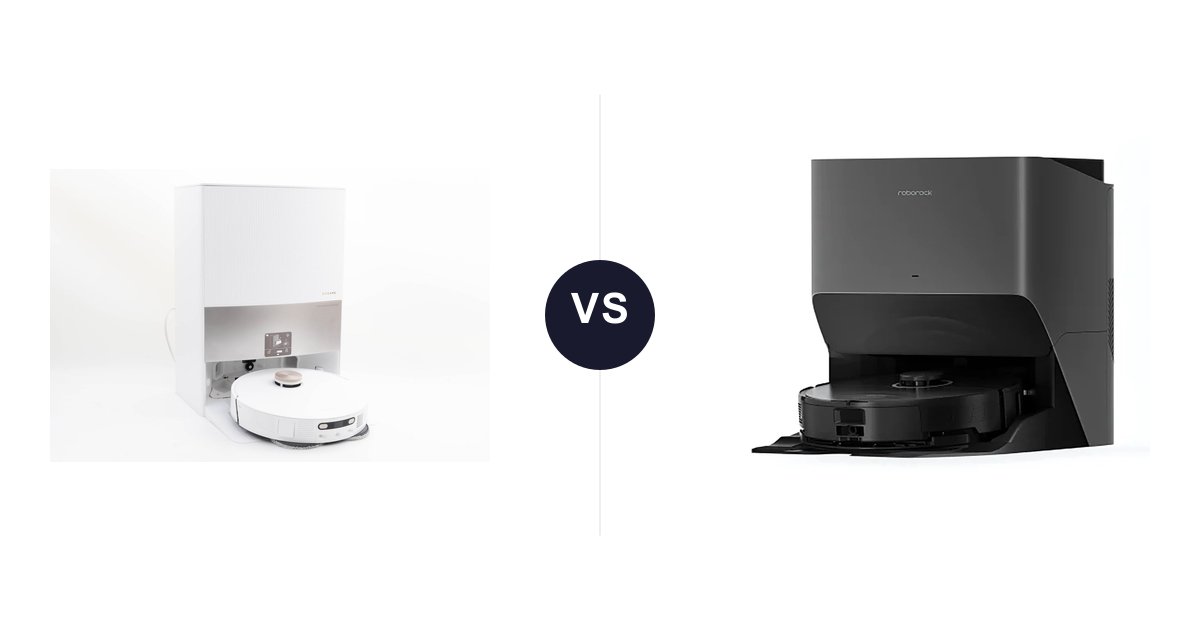
Dreame and Roborock are two of the fastest-growing robot vacuum brands. We compare their flagship models across navigation, suction, mopping, self-emptying stations, and value to help you pick the right one.
What Happened to Neato? Best Robot Vacuum Alternatives in 2026
Neato Robotics shut down in 2023 after Vorwerk discontinued the brand. Learn what happened, why Neato failed, and which robot vacuums are the best replacements for former Neato owners in 2026.