Affiliate Disclosure: Home Vacuum Zone is reader-supported. When you buy through links on our site, we may earn an affiliate commission at no additional cost to you. This does not influence our reviews or recommendations — we only recommend products we genuinely believe in.
Quick Picks
Shop vacuums are the workhorses of the cleaning world. Unlike household vacuums designed for delicate dust and carpet fibres, shop vacs handle construction debris, sawdust, nails, screws, liquids, and messes that would destroy regular vacuums.
Not what you’re looking for? If you want a wet dry vacuum for daily hard floor cleaning (the cordless stick-style machines from Dyson, Tineco, and others that vacuum and mop simultaneously), see our best wet dry vacuums for 2026 guide instead. Shop vacs and wet dry floor cleaners share a name but they’re completely different products.
Whether you’re a DIY enthusiast, contractor, car detailer, or homeowner dealing with basement flooding, the right shop vac saves hours of cleanup time. This guide covers six top-rated models across different capacities and price points to match any need.
Quick Comparison
| Model | Capacity | Peak HP | Value Tier | Weight | Best For |
|---|---|---|---|---|---|
| Craftsman 16-Gallon | 16 gal | 6.5 | Mid-Range | 26.0 lbs | Heavy-duty use |
| DeWalt DXV10P | 10 gal | 5.5 | Mid-Range | Not published | Portability |
| Karcher WD 3 | 4.5 gal | Not rated | Budget | 10.8 lbs | Home/DIY |
| Karcher WD 6 P S | 7.9 gal | Not rated | Premium | 21.8 lbs | Premium / power-tool work |
| Shop-Vac Stainless | 5 gal | 4.5 | Budget | Not published | Durability |
| Vacmaster Beast | 5 gal | 5.5 | Mid-Range | 12 lbs | Small spaces |
Karcher rates its machines in watts of input and suction power, not peak HP, so there’s no comparable figure for the WD 3 or WD 6 P S. DeWalt and Shop-Vac publish no machine weight. Craftsman quotes assembled weight, Vacmaster quotes tool weight, and Karcher’s WD 6 P S figure excludes accessories.
What is a Shop Vac?
A shop vacuum (or wet/dry vacuum) is a heavy-duty cleaning machine designed for workshops, construction sites, garages, and anywhere messes exceed what household vacuums can handle. If you’re curious about how vacuum cleaners work at a fundamental level, the principles behind shop vacs are similar but scaled up significantly.
Shop Vac vs Regular Vacuum
| Feature | Shop Vac | Regular Vacuum |
|---|---|---|
| Tank size | 4-16 gallons | 0.5-1.5 gallons |
| Hose diameter | 2-2.5 inches | 1-1.5 inches |
| Motor power | 4-6.5 HP | 1-2 HP |
| Can handle liquids | Yes | No |
| Debris type | Nails, screws, sawdust | Dust, dirt, hair |
| Filtration | Basic | HEPA available |
| Weight | 12-30 lbs | 8-20 lbs |
| Noise level | 80-90 dB | 65-75 dB |
When You Need a Shop Vac
Essential for:
- Workshop dust collection (sawdust, wood chips)
- Construction cleanup (drywall dust, debris)
- Garage cleaning (car dirt, leaves, spills)
- Wet messes (flooded basements, spills)
- Car detailing (interior cleaning)
Not ideal for:
- Regular household dusting (no HEPA filtration)
- Carpet deep cleaning (no brush agitation)
- Quiet environments (very loud operation)
- Fine allergen control (lacks sealed systems)
Top Shop Vac Reviews
1. Craftsman CMXEVBE17595 16-Gallon - Best Overall
Craftsman has been synonymous with workshop tools for nearly a century, and their 16-gallon shop vac upholds that reputation for reliability and power. This is the shop vac that handles anything you throw at it.
Power and Capacity:
At 6.5 peak HP it’s the most powerful machine in this roundup on paper. The 16-gallon tank handles large jobs without constant emptying - clean an entire workshop or basement flood before stopping.
Qwik Lock Filter System:
Craftsman’s Qwik Lock fastening is built for quick, easy filter changes. That matters more than you’d think: Craftsman’s wet application filter for this vac is for wet pick-up only, so using it means swapping filters between wet and dry jobs, and a fiddly system discourages that.
Practical Features:
The 20.5-foot power cord and 7-foot hose provide about 27.5 feet of reach without extension cords. The rear blowing port turns the vac into a blower for leaves and grass clippings. A built-in oversized drain lets you empty liquids without tipping the drum, and Craftsman backs it with a 3-year limited warranty. TechGearLab notes the casters sit around the outside of the canister rather than underneath.
Considerations:
At 16 gallons and 26 lb assembled, this is a substantial machine requiring dedicated storage space. It’s overkill for occasional car cleaning or small workshops. Craftsman publishes no sound rating, but TechGearLab measured 96 dB on the 16-gallon Craftsman it tested, so you’ll want hearing protection for extended use.
Verdict: For contractors, serious DIYers, or anyone needing maximum capacity and power, the Craftsman 16-gallon is the shop vac by which others are measured.
2. DeWalt DXV10P 10-Gallon - Best Portable
DeWalt brings their job site expertise to shop vacuums with the DXV10P - a unit that balances capacity with genuine portability. DeWalt pitches it on mobility, with rubberized wheels and a large carry handle on a 10-gallon machine.
Mobility Features:
The rubberized swivel casters are meant for workshop floors and uneven job-site surfaces, and the carry handle matters when you’re hauling the vac between floors or to job sites.
Power and Performance:
The 5.5 HP motor handles most workshop tasks effectively. While not as powerful as the Craftsman 16-gallon, it exceeds the needs of most homeowners and DIYers. The 10-gallon capacity is the sweet spot - large enough for big jobs, small enough to store in a standard garage.
Built-in Blower:
The rear blower port connects to the hose, turning the vac into a powerful blower for sawdust, leaves, or jobsite debris. This dual functionality adds value for workshop cleanup.
Considerations:
Accessory storage is limited - the included tools don’t store as neatly as competitors. It’s loud in use, like everything in this category, so wear hearing protection for long sessions.
Verdict: For homeowners and contractors wanting substantial capacity without the bulk of 16-gallon units, the DeWalt DXV10P offers excellent balance of power, capacity, and portability.
3. Karcher WD 3 4.5-Gallon - Best Compact
Karcher’s entry-tier shop vac is the one to buy when the machine has to live on a shelf rather than in a corner. At 10.8 lbs you can carry it out to the car with one hand, and the 4.5-gallon drum takes a boot full of dog hair or a weekend of sawdust before it needs emptying.
One Filter, Wet or Dry:
Its cartridge filter stays in place for both wet and dry pickup, which is rare at this end of the market. Every other budget shop vac makes you pull the paper filter out before you touch water, and that’s the step people forget until the filter’s ruined. A fleece bag drops in on top for fine dust when you want cleaner emptying.
What You Get:
Hose with a bent handle, two extension tubes, a switchable wet/dry floor nozzle and a crevice nozzle. There’s a blower port for clearing leaves and decking, four castors, and a 19.7 ft cord that gives 26 ft of total reach.
Considerations:
The 1000W motor is the weak point. At 230 W of suction power it’s modest. The 6.5 ft hose is short too, so you’ll drag the canister around more than you would with a 7-footer. No power-tool outlet and no semi-automatic filter cleaning either; both of those live on the WD 6 P S further down.
Verdict: For home workshops, car detailing and light DIY, the WD 3 is the compact pick, and the no-swap filter makes it more forgiving than most budget shop vacs. If you want the same brand with the workshop features, skip to the WD 6 P S.
4. Shop-Vac 5989300 5-Gallon Stainless Steel - Best Durability
This is Shop-Vac’s stainless steel 5-gallon model.
Stainless Steel Advantage:
The tank is stainless steel rather than plastic. The 5-gallon capacity hits the sweet spot for most homeowners - not too big, not too small.
3-in-1 Functionality:
The 5989300 vacuums wet and dry messes and converts to a blower. Its rear blower port handles leaves, sawdust, and debris dispersal. This versatility eliminates the need for separate tools.
Performance:
The 4.5 HP motor handles typical home and workshop tasks effectively. While not the most powerful in this roundup, it’s adequate for all but the most demanding construction cleanup. The included accessories (extension wands, floor nozzle, crevice tool, gulper nozzle) cover most use cases.
Considerations:
Limited onboard storage for accessories.
Verdict: For those prioritizing longevity and durability over raw power, the Shop-Vac’s stainless tank is the reason to choose it over the plastic-drum alternatives.
5. Vacmaster Beast VFB511H - Best Power-to-Size
The Beast packs the most motor into the least machine of anything here: 5.5 peak HP in a 12 lb, 5-gallon body. If your storage is a shelf in a small garage rather than a corner of a workshop, that combination is the reason to look at it.
Surprising Power:
The 5.5 peak HP motor matches or exceeds several larger machines on paper. Vacmaster also publishes 102 CFM, 82 inches of water lift and 320 air watts, tested to the ASTM standard at the end of the included hose. It’s built for sawdust, small debris and wet messes, and the 5-gallon drum is enough for a car interior or a single-room tidy.
Filters and Warranty:
It ships with a high-efficiency cartridge filter, a high-efficiency dust bag and a foam wet filter, plus a 7 ft hose, an 18 ft cord, and onboard storage for the hose, cord and accessories. Vacmaster’s Amazon listing says the filter and bag capture fine dust particles down to 1 micron, and Vacmaster backs it with a 5-year limited warranty.
Performance:
For occasional use - garage cleanup, car detailing, small workshop tasks - the Beast performs adequately. Don’t expect it to handle continuous contractor use or massive construction debris without frequent emptying and potential overheating.
Considerations:
The 5-gallon tank needs emptying far more often than a 16-gallon drum on big wet cleanups, and the 1-7/8 in. hose is narrower than the Craftsman’s 2-1/2 in., so bulky debris has less room to pass.
Verdict: For occasional home use, car cleaning, and anyone short on storage space, the Beast delivers real shop vacuum capability in a body you can lift with one hand. If space isn’t your constraint, the DeWalt gives you twice the tank.
6. Karcher WD 6 P S 7.9-Gallon - Best Premium
Karcher’s German engineering doesn’t compete on raw power numbers. It competes on the irritations the other shop vacs leave you with. Stainless tank. Drain screw, so you can empty dirty water without tipping a 20-pound canister over your boots. Stainless steel extension tubes. Small things, but they’re the ones that bug you on the cheaper units.
Power and Capacity:
Karcher doesn’t quote a peak HP figure, so it can’t be lined up against the Craftsman and DeWalt that way. What Karcher does publish is 1300W of rated input, 265 W of suction power and 158 cfm of airflow. At 7.9 gallons it handles a full garage clean-out or a basement spill without constant emptying.
Semi-Automatic Filter Cleaning:
The one Karcher feature nothing else here matches. Press the filter-cleaning button mid-job and it clears the filter without taking it out. If you’ve ever stopped a workshop tidy-up to bang dust out of a clogged cartridge, you know why this matters.
Power Tool Outlet:
The auto start/stop outlet is the feature woodworkers actually buy this for. Plug a mitre saw or sander into the back of the vac, pull the trigger, the vac fires up. Stop cutting, the vac runs a few seconds to clear the hose, then shuts itself off. Two switches become one, and dust collection runs by itself.
Considerations:
At 21.8 lbs without accessories it’s no lightweight for a 7.9-gallon machine. Loud at full power: Karcher rates it at 74 dB(A), and Trusted Reviews measured 80.1 dB at maximum on the UK’s WD6 P Premium, a related model rather than this US one. Replacement filter bags cost more than generic shop vac consumables, so factor that into long-term running costs. And if raw capacity matters more to you than refinement, the Craftsman at the top of this list holds twice as much for less.
Verdict: For homeowners and serious DIYers who want the irritations engineered out rather than the suction maxed out, the Karcher WD 6 P S is the premium tier. If you want a deeper Karcher-only comparison, see our Karcher WD3 vs WD5 vs WD6 review.
Buying Guide: How to Choose
For household vacuum recommendations across all types, see our comprehensive vacuum buying guide. The advice below is specific to shop vac selection.
Determine Your Capacity Needs
4-6 Gallons: Car cleaning, small workshops, light home use 8-12 Gallons: General homeownership, medium workshops, most DIY 16+ Gallons: Contractors, heavy construction, major cleanup
Capacity directly affects how often you’ll empty the tank. A 4-gallon model might require three or four stops during a major garage cleanup, while a 16-gallon unit handles the entire job. However, larger tanks mean heavier units and more storage space requirements. Consider where you’ll store the vac - apartment dwellers and those with limited garage space benefit from compact 4-6 gallon models, while workshop owners with dedicated tool areas can accommodate larger units.
Motor Power Considerations
4-5 HP: Adequate for home use and light DIY 5-6 HP: Good for regular workshop use and contractors 6.5+ HP: Heavy-duty construction and commercial use
Note: “Peak HP” ratings are marketing numbers. Real-world performance depends on overall design, not just motor specs.
Motor power determines suction strength, but it’s not the only factor. A well-designed 5 HP vac with proper airflow can outperform a poorly designed 6 HP model. Also consider that higher horsepower typically means louder operation and higher electricity consumption. For most homeowners, 5-6 HP provides ample power without excessive noise or energy costs.
Key Features to Look For
Hose Quality:
- Crush-resistant construction
- 7-foot minimum length
- 2-inch diameter for debris flow
Filter System:
- Easy tool-free changes
- Cartridge filter for dry use
- Foam sleeve for wet use
Mobility:
- Large, smooth-rolling casters
- Locking wheels for stability
- Good handle placement
Blower Function: Converts vac to blower for versatile cleanup
Accessory Storage: Onboard storage keeps attachments organized and prevents lost tools. Look for models with clips, caddies, or storage compartments for wands, nozzles, and brushes.
Cord Length: A 15-foot minimum cord length reduces the need for extension cords. Some premium models offer 20-foot cords with cord wraps for convenient storage.
Drain Plug: Bottom-mounted drain plugs simplify emptying wet debris and allow you to drain liquids without removing the motor head - especially useful after basement flooding or large wet messes.
Wet vs Dry Use
For Wet Messes:
- Remove paper filter
- Install foam sleeve or no filter
- Empty tank immediately after use
- Dry tank completely to prevent rust
For Dry Debris:
- Use cartridge or bag filter
- Consider HEPA for fine dust
- Empty when 2/3 full for best suction
If you’re weighing a shop vac against a steam mop for hard floors, keep in mind that each tool excels at different tasks. Never switch between wet and dry pickup without addressing the filter. Wet debris will destroy paper filters, requiring replacement. Conversely, using no filter for dry pickup allows fine dust into the motor, shortening its lifespan. Keep both foam sleeves and cartridge filters on hand for quick switching between modes.
Maintenance and Longevity Tips
Proper care dramatically extends the life of any vacuum. For general tips that apply to all vacuum types, see our vacuum maintenance guide.
Regular Filter Cleaning
Shop vac filters clog with use, reducing suction dramatically. Clean or replace filters every 2-3 uses for fine dust, less frequently for larger debris. Cartridge filters can typically be tapped clean or washed (let dry completely before reinstalling). Replace filters showing tears, holes, or compression that won’t recover.
Proper Storage
Store shop vacs in dry locations to prevent rust on metal components and mold growth in tanks and hoses. Leave the lid slightly ajar after wet pickup to allow complete drying. Hanging hoses prevents permanent kinks that restrict airflow.
Motor Protection
Avoid overfilling - when debris reaches the intake port, it can damage the motor. Most shop vacs have float mechanisms that stop suction when liquid reaches dangerous levels, but these can fail. Empty tanks at 2/3 capacity for optimal performance and longevity.
Tank Care
Rinse tanks after wet pickup or particularly dirty jobs. Dried-on debris becomes difficult to remove and can harbor mold. For stubborn residue, use mild detergent and water - avoid harsh chemicals that may degrade plastic or corrode metal.
Further Reading
- 5 Best Corded Stick Vacuums: No Batteries, No Recharging (2026)
- Vacuum Buying Guide 2026: How to Choose the Best Vacuum Cleaner
- Best Handheld Vacuums for 2026: 5 Top Picks Compared
Common Shop Vac Mistakes to Avoid
Using Wrong Filter for Task: Paper filters disintegrate with liquids; using no filter for fine dust damages motors. Match filter type to the mess.
Ignoring Full Tanks: Overfilled tanks reduce suction and can force debris into the motor. Empty regularly.
Vacuuming Hot Debris: Never vacuum hot ashes, coals, or recently used materials. Wait 24+ hours for complete cooling - hot debris can melt plastic components or start fires.
Picking Up Reactive Materials: Avoid vacuuming flammable liquids, reactive chemicals, or fine explosive dusts (like certain metal powders). Shop vacs aren’t spark-proof.
Neglecting Hose Clogs: Reduced suction often indicates clogged hoses, not weak motors. Disconnect and check for blockages before assuming motor problems.
Our Top Picks
Craftsman CMXEVBE17595 16-Gallon Shop Vac
Best overall shop vacThe Craftsman 16-Gallon pairs a 6.5 peak HP motor and a 2-1/2 in. hose with an oversized drain, a rear blower port and a 3-year warranty. Best for garage and workshop cleanups that need capacity more than portability.
What We Like
- TechGearLab ranked a Craftsman 16-gallon first of the 10 shop vacs it tested (it doesn't name the model number)
- 16-gallon drum and 6.5 peak HP motor for large garage, shop and jobsite cleanups
- Built-in oversized drain for emptying liquids
- Wide 2-1/2 in. Dual-Flex hose designed to resist kinking
- Rear blowing port and a 3-year limited warranty
What We Don't
- Heavy at 26 lb assembled, and the drum takes up a lot of storage space
- 7 ft hose is shorter than the 11.5 ft hose on Karcher's WD 5 P and WD 6 P S
- Loud, with TechGearLab measuring 96 dB
- Craftsman publishes no CFM or water-lift figures
DeWalt DXV10P 10-Gallon Wet/Dry Vacuum
Best portable shop vacThe DeWalt DXV10P pairs 5.5 peak HP with rubberized wheels that protect finished floors while rolling smoothly across rough workshop surfaces. Best for contractors and DIYers who need a mid-size wet/dry vacuum that balances 10-gallon capacity with portability for moving between rooms or job sites.
What We Like
- Rubberized wheels for smooth mobility and floor protection
- Powerful 5.5 HP motor for effective cleaning
- Built-in blower port for versatile use
What We Don't
- Limited onboard storage for accessories
- Loud operation at approximately 78-80 dB during use
- Cartridge filter clogs quickly with fine drywall or concrete dust
Karcher WD 3 Multi-Purpose 4.5 Gallon Wet/Dry Shop Vacuum
Best compactA 4.5-gallon drum at 10.8 lbs, and the cartridge filter stays in for wet pickup, so there's no filter swap to forget. Modest suction at 230 W is the trade.
What We Like
- Compact and light at 10.8 lbs, easy to lug to the car or carry between rooms
- Cartridge filter handles wet and dry pickup without swapping, unlike most budget shop vacs
- Decent set of accessories included at this budget tier (hose, extension tubes, switchable floor nozzle, crevice nozzle)
- Built-in blower function adds versatility for clearing leaves and sawdust
What We Don't
- Short 6.5 ft hose limits reach without dragging the canister
- 1000W motor is on the weak side compared to similarly-priced Ridgid and Craftsman models
- No power-tool outlet and no semi-automatic filter cleaning
- Plastic latches and clips rather than metal
Shop-Vac 5989300 5-Gallon Stainless Steel
Best stainless steel shop vacThe Shop-Vac 5989300 pairs a dent-resistant stainless steel tank with a 4.5 HP motor and 3-in-1 wet/dry/blower functionality, delivering workshop-grade durability in a compact 5-gallon form factor. Best for garage workshops and home renovation projects where a rugged, corrosion-resistant tank matters more than maximum capacity.
What We Like
- Durable stainless steel tank resists dents, rust, and corrosion
- Powerful 4.5 HP motor delivers strong suction performance
- Versatile 3-in-1 function: wet pickup, dry vacuuming, and blower mode
- 5-gallon capacity reduces frequency of emptying
What We Don't
- Heavier than plastic tank models at approximately 12 lbs
- Limited onboard accessory storage
- Short 10-foot cord may require frequent outlet changes
- Smaller hose diameter (1.25 inches) compared to larger shop vacs
Vacmaster Professional Beast VFB511H 0201 5-Gallon Vacuum
Best power-to-size5.5 peak HP in a 12 lb, 5-gallon body makes the Vacmaster Beast the pick when storage space matters more than tank capacity.
What We Like
- Vacmaster rates it at 102 CFM, 82 in. of water lift and 320 air watts, tested to ASTM at the end of the hose
- High-efficiency cartridge filter and dust bag rated to capture particles down to 1 micron
- Compact 5-gallon tank and 12 lb tool weight, with onboard hose, cord and accessory storage
- Converts to a blower
- 5-year limited warranty
What We Don't
- 5-gallon tank needs emptying far more often than 16-gallon drums on big wet cleanups
- 7 ft hose is shorter than the 11.5 ft hose on Karcher's WD 5 P and WD 6 P S, for 25 ft of total reach with the cord
- 1-7/8 in. hose is narrower than the 2-1/2 in. hose on the Craftsman 16-gallon
Karcher WD 6 P S Multi-Purpose 7.9 Gallon Wet/Dry Shop Vacuum
Best premiumStainless tank, drain plug, semi-automatic filter cleaning, and a power-tool outlet make the WD 6 P S the most refined shop vac in this lineup.
What We Like
- Stainless steel tank with drain plug, empty dirty water without tipping the canister
- Karcher rates it at 265 W suction power and 158 cfm airflow, slightly above the WD 5/P's 260 W and 156 cfm
- Stainless steel extension tubes, where the WD 5/P's are plastic
- Onboard power-tool outlet with auto start/stop and semi-automatic filter cleaning
- Includes a flexible accessory hose extension that the WD 5/P does not
What We Don't
- Loud at maximum power (Karcher rates it at 74 dB(A); Trusted Reviews measured 80.1 dB at maximum on the UK WD6 P Premium, a related model)
- Heavy and bulky at 21.8 lbs without accessories, harder to move than the 19.2 lb WD 5/P
- Replacement filter bags and cartridges cost noticeably more than generic shop vac consumables
- 7.9-gallon tank at a premium-tier price, where the Craftsman 16-gallon has twice the drum volume for less
Sources & Research
- Craftsman CMXEVBE17595 product page
- TechGearLab Craftsman 16-Gallon review (Aug 2025)
- Amazon Product Page
- Amazon Product Page
- DeWalt Official Site
- Karcher Official Product Page
- Amazon Product Page
- Amazon Product Page
- Shop-Vac Website
- Vacmaster (Cleva) VFB511H 0201 product page
- Amazon Product Page
- Karcher Official Product Page
- Karcher US Home & Garden Warranty
- Trusted Reviews Karcher WD6 P Premium review (UK model, Apr 2022)
- Amazon Product Page
Continue Reading
Explore more buying guides content or browse our other categories.
Frequently Asked Questions
- What is the difference between a shop vac and a regular vacuum?
- Shop vacs (wet/dry vacuums) are designed for heavy-duty cleaning of workshop debris, construction mess, and both wet and dry materials. They have larger hoses (2-2.5 inches vs 1-1.5 inches), more powerful motors (4-6.5 HP vs 1-2 HP), larger tanks (5-16 gallons vs 1-2 quarts), and can handle liquids. Regular vacuums are designed for household dust and debris only. Shop vacs lack HEPA filtration and fine dust control needed for home use but excel at construction debris, garage cleanup, and water removal.
- Can I use a shop vac for regular house cleaning?
- You can, but it's not ideal. Shop vacs lack the fine filtration of household vacuums, meaning they can expel fine dust back into the air. They're also much louder (80-90 dB vs 65-75 dB for home vacuums), heavier, and lack motorized brush heads for carpet cleaning. Use a shop vac for garage, workshop, basement, and wet cleanup; stick with a regular vacuum for home interior cleaning. If you only have space for one, a quality household vacuum handles home cleaning better than a shop vac handles fine dust.
- What size shop vac do I need?
- Choose based on your primary use: (1) Light home/DIY use (car cleaning, small workshop): 4-6 gallon capacity with 4-5 HP motor. (2) Medium workshop/homeowner: 8-12 gallons with 5-6 HP motor for most tasks. (3) Heavy contractor use: 16+ gallons with 6.5+ HP motor for construction sites and major cleanups. Larger tanks mean less frequent emptying but heavier, bulkier machines. Most homeowners find 8-10 gallons the sweet spot between capacity and portability.
- Can a shop vac pick up water and wet messes?
- Yes, wet/dry vacuums are specifically designed for both wet and dry pickup. For wet messes, remove the standard filter (paper filters disintegrate when wet) and use a foam sleeve or no filter depending on the model. Empty the tank immediately after wet pickup to prevent rust, mold, and odors. Never pick up flammable liquids with a standard shop vac. Some models include pumps that can discharge water while vacuuming - useful for major water removal like flooded basements.
- What accessories do I need for my shop vac?
- Essential accessories include: (1) Extension wands for reaching high and low areas. (2) Floor nozzle for general cleanup. (3) Crevice tool for tight spaces. (4) Brush nozzle for delicate surfaces. (5) Dust collection bag for fine dust (protects motor and makes emptying cleaner). Optional but useful: (6) Car cleaning kit with detailing tools. (7) Gutter cleaning kit for outdoor use. (8) HEPA filter for fine dust. (9) Wet foam sleeve for liquid pickup. Most shop vacs include basic accessories; specialty kits are available separately.
Written By
Home Vacuum Zone
Our team researches vacuum cleaners against published specifications and independent lab results to help you make confident buying decisions.
Related Articles
Black Friday Vacuum Deals: Which Dyson, Robot Vacuum and Shop Vac to Buy
Black Friday vacuum deals sorted by what to buy, not by what's cheapest. Which Dyson, which robot vacuum and which shop vac, picked on independent test results, and how to tell a real discount from a fake one.
Bagged vs Bagless Vacuums: Which Type Is Actually Better?
Bagged and bagless vacuums each have distinct advantages for different households. We compare cost, filtration, allergen control, maintenance, and convenience to help you choose the right type.
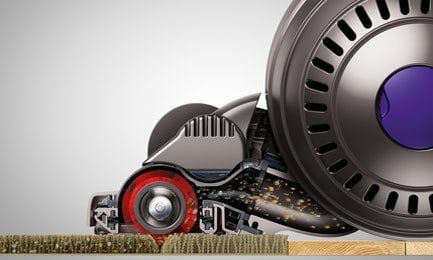
Beater Bar vs No Beater Bar: Does Your Vacuum Need One? (2026 Guide)
Learn what a beater bar is, when you need one, and the best vacuums with and without beater bars. Complete guide for carpet, hardwood, and pet hair cleaning.