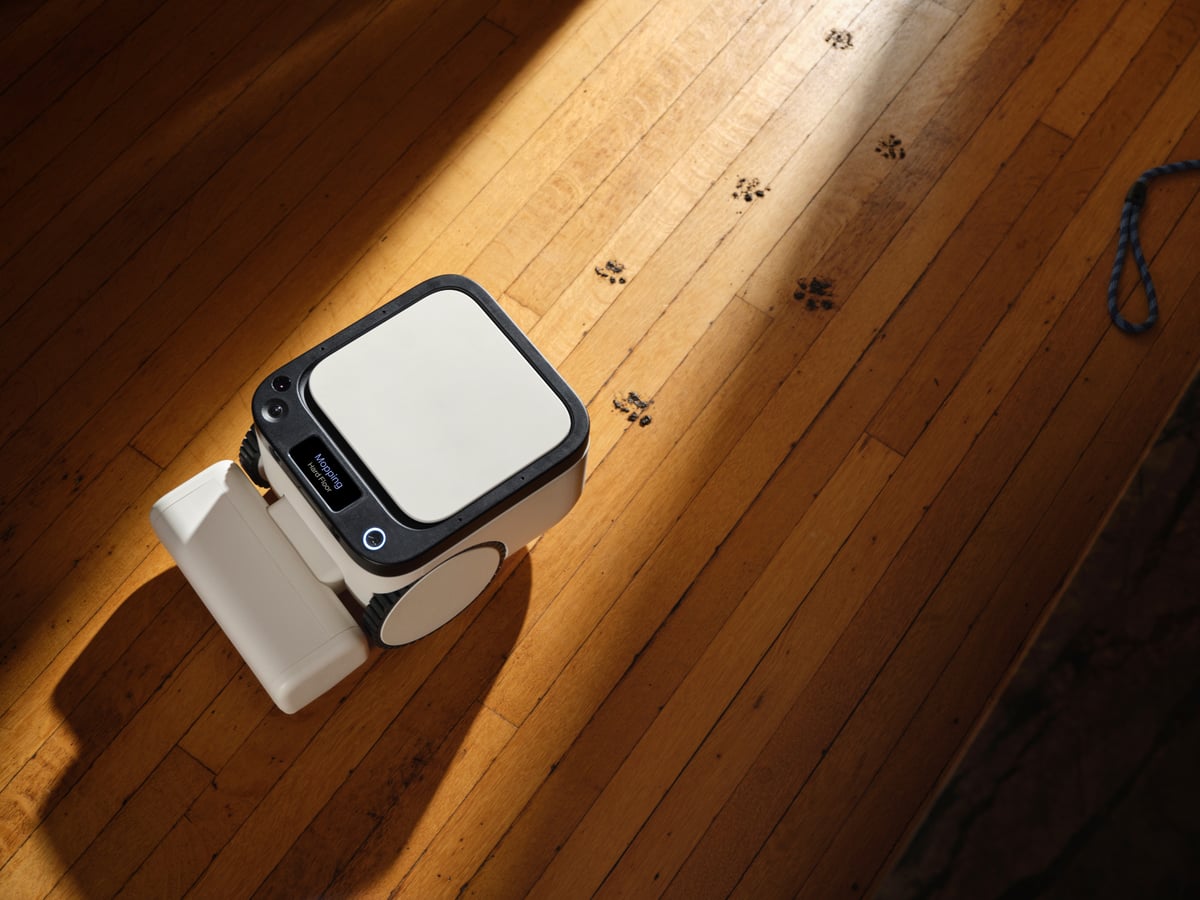
Affiliate Disclosure:Home Vacuum Zone is reader-supported. When you buy through links on our site, we may earn an affiliate commission at no additional cost to you. This does not influence our reviews or recommendations — we only recommend products we genuinely believe in.
Three of the most respected testing outfits in the business have looked at the Matic robot vacuum. They reached wildly different conclusions.
WIRED gave it 10 out of 10 and called it the best robot vacuum they’d ever tested, a score their reviewer said was the only one of its kind in over a decade of work. Vacuum Wars measured the highest suction they’ve ever recorded from a robot vacuum, then declined to put it in their top 20. RTINGS bought one, ran it through their bench, and concluded that navigation problems undermine its cleaning on every surface type they test.
Those verdicts look irreconcilable. They aren’t. Once you line up the dates and work out what each outfit was actually measuring, a consistent picture emerges, and it’s a genuinely useful one if you’re weighing up a premium-priced robot vacuum you can’t buy on Amazon.
What Matic Is Actually Selling
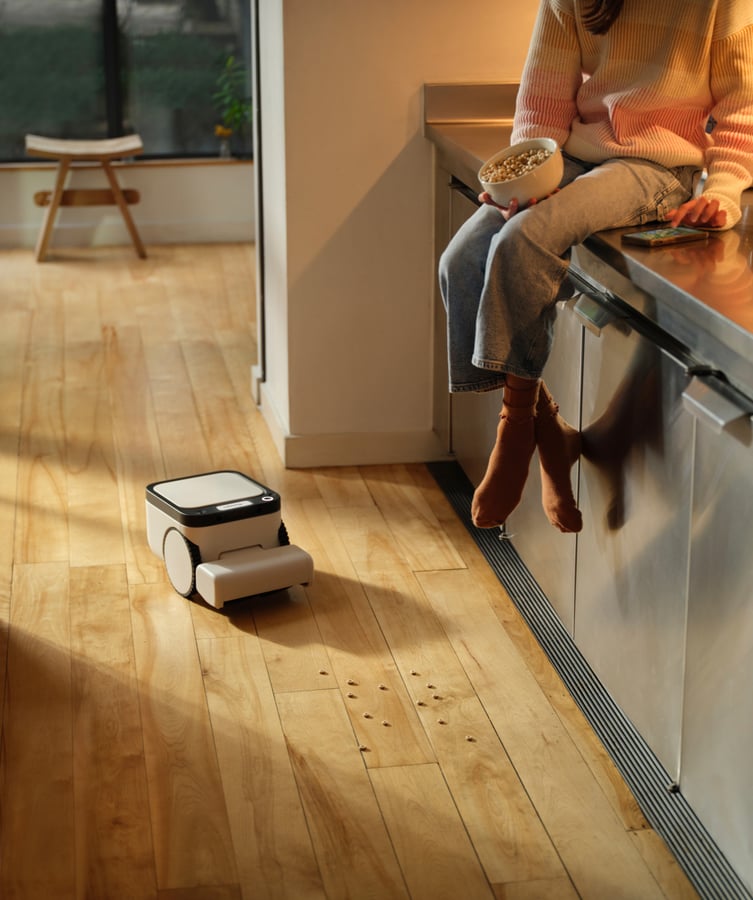
The Matic isn’t another Roborock clone with a bigger number on the box. It’s a different machine.
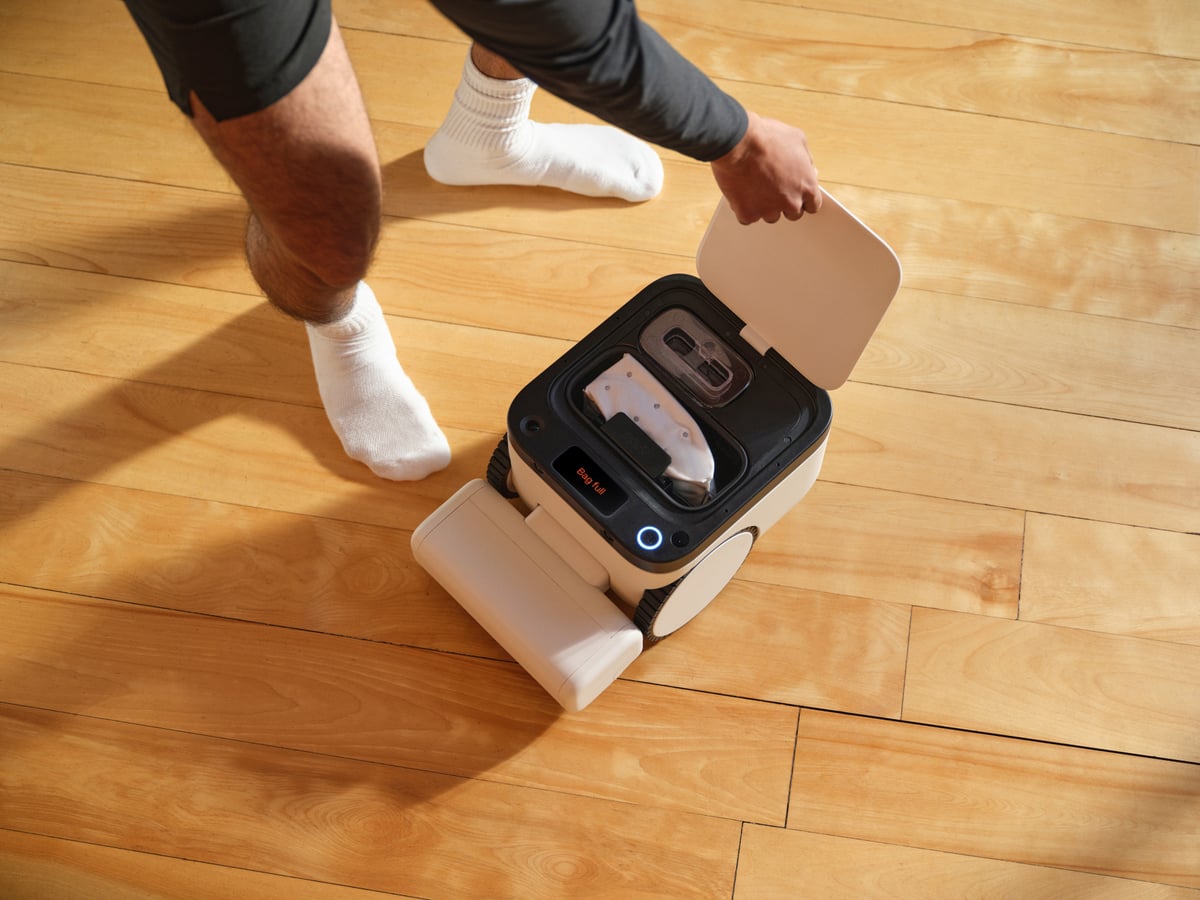
Almost every premium robot vacuum now ships with a large dock that empties the bin, washes the mop, and dries it. Matic threw that out. The bag, the clean water tank, and the mop-washing system all live inside the robot itself, and the dock is just a charger. While it mops, it continuously rinses its roller with clean water and wrings the dirty water straight into the onboard bag, where a salt compound turns it into a gel so it can’t leak.
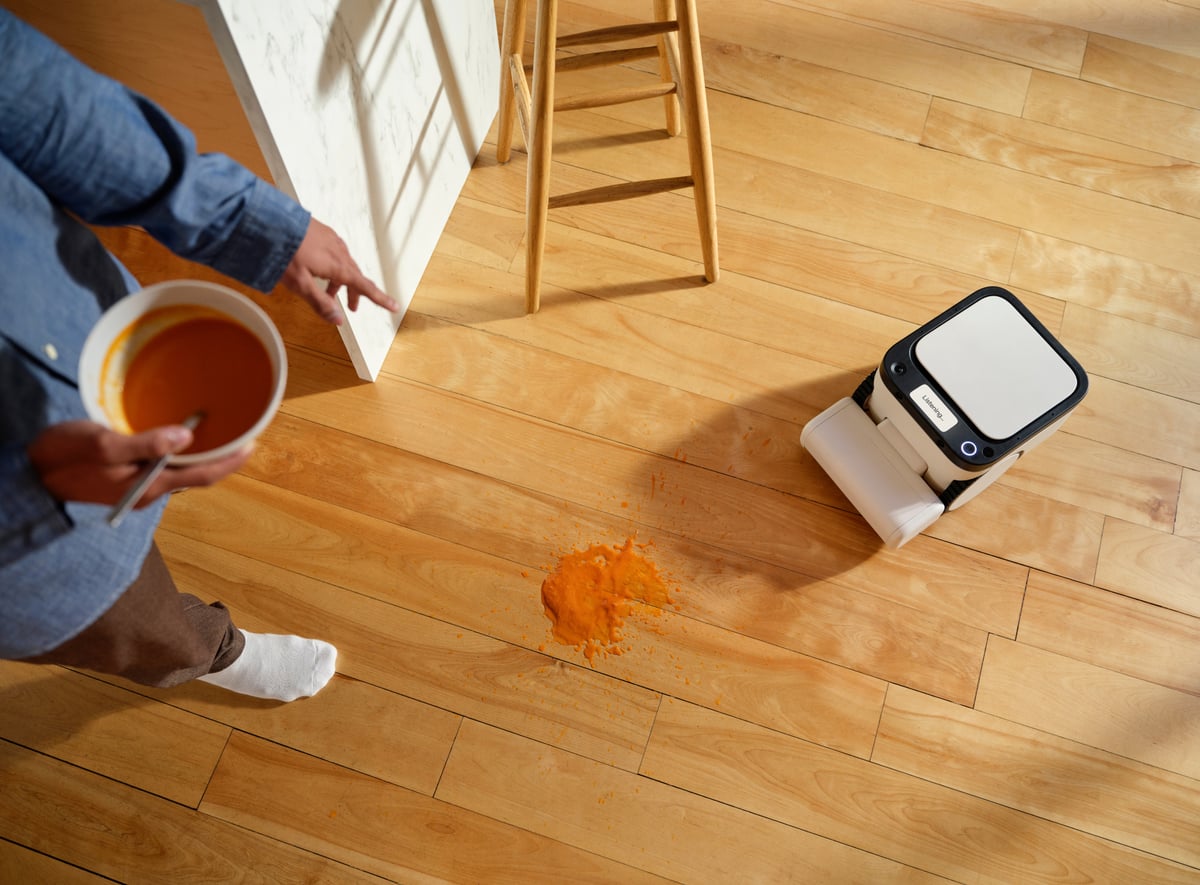
That design has a genuine payoff: the Matic can pick up wet spills, which almost nothing else on the market can do.
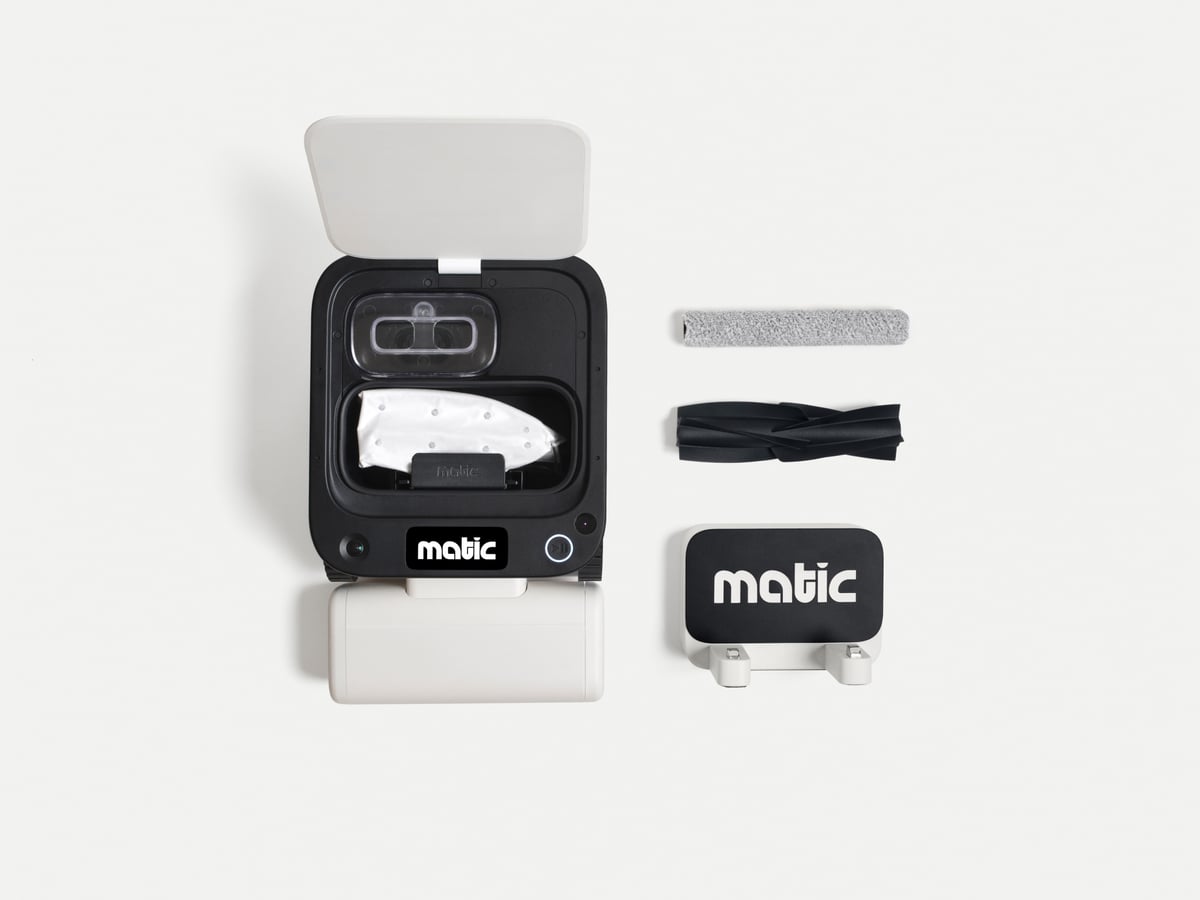
It also skips LiDAR. Instead it uses five cameras feeding an NVIDIA Jetson Orin Nano to build detailed 3D maps, with infrared projectors so it works in the dark. Processing happens on the device rather than in the cloud. If you want the background on why that’s an unusual choice, our guide to how robot vacuums work covers the navigation trade-offs in more detail.
Matic raised $115m and spent nine years on this, according to the company. Whatever else is true, nobody can accuse them of building the same thing as everyone else.
Where It’s Genuinely Class-Leading
The hardware is not in question. It’s remarkable.
Vacuum Wars recorded 8.11 kPa of suction, the highest figure across roughly 200 robot vacuums they’ve put through the same test, and 35 CFM of airflow, their second-highest ever. On flattened pet hair, they measured 100% pickup against an 81% average. Hair wrapping around the brush roll came in at 7%, where the average is 28%. If you’ve been reading our guide to the best robot vacuums for pet hair, you’ll know how unusual that combination is.
RTINGS, who were unimpressed by almost everything else, called its obstacle avoidance some of the best they’ve seen from any robot vacuum. The five-camera system with its dedicated GPU beats purely LiDAR-based navigation for environmental awareness, works just as well in the dark, and consistently avoids pet waste. It navigates around mirrors without bumping into them, which trips up plenty of rivals.
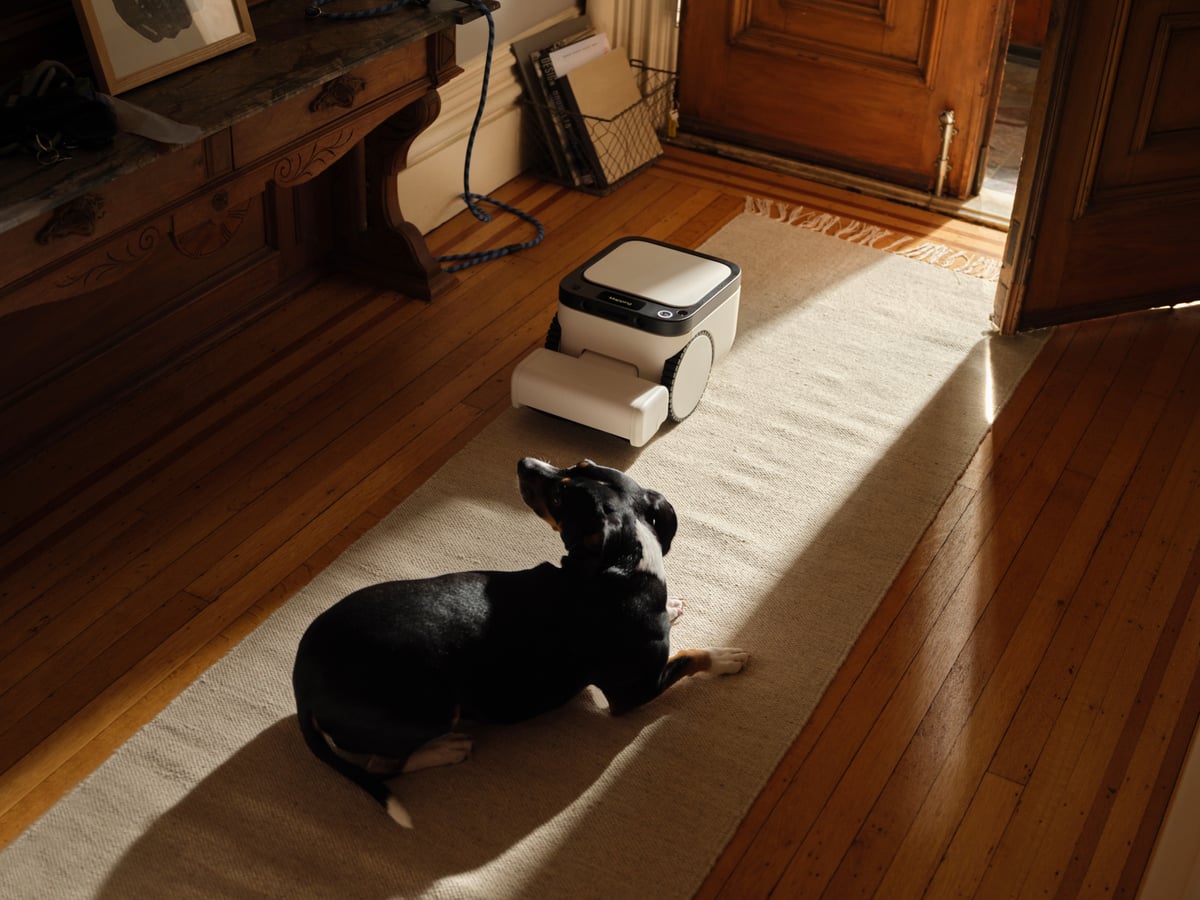
It’s also quiet, at roughly 55dB, and the battery is strong: 2.5 hours vacuuming or three hours mopping on Matic’s own figures.

So the Matic has best-in-class airflow, best-in-class obstacle avoidance, class-leading tangle resistance, and a genuinely clever approach to wet spills. On paper it should be untouchable.
Where It Falls Over
RTINGS published their review on 1 April 2026 and updated it to a new test bench on 27 July 2026. Their conclusion is blunt: navigation problems undermine performance across every surface type, and it consistently struggles with corners and edges.
The specifics are worse than the summary. On hard floors, it leaves most debris in corners and doesn’t do much better along baseboards. What makes that particularly awkward is that the app recognises when an area has been missed and doesn’t send the robot back. Running it again didn’t fix it. Switching to Heavy Duty mode helped slightly. Manually drawing the missed area on the map didn’t fully fix it either.
Low-pile carpet was worse still. On the first attempt it barely covered any area, pausing mid-clean or stopping altogether. A second attempt introduced a navigation bug that left a section entirely uncleaned. Pet hair pickup suffered from the same root cause: initially it wouldn’t move onto the carpet at all, and when it did, it pushed hair further into the fibres rather than lifting it. Stain cleaning, by RTINGS’ account, is close to non-functional, because the robot reads stains as obstacles and avoids them.
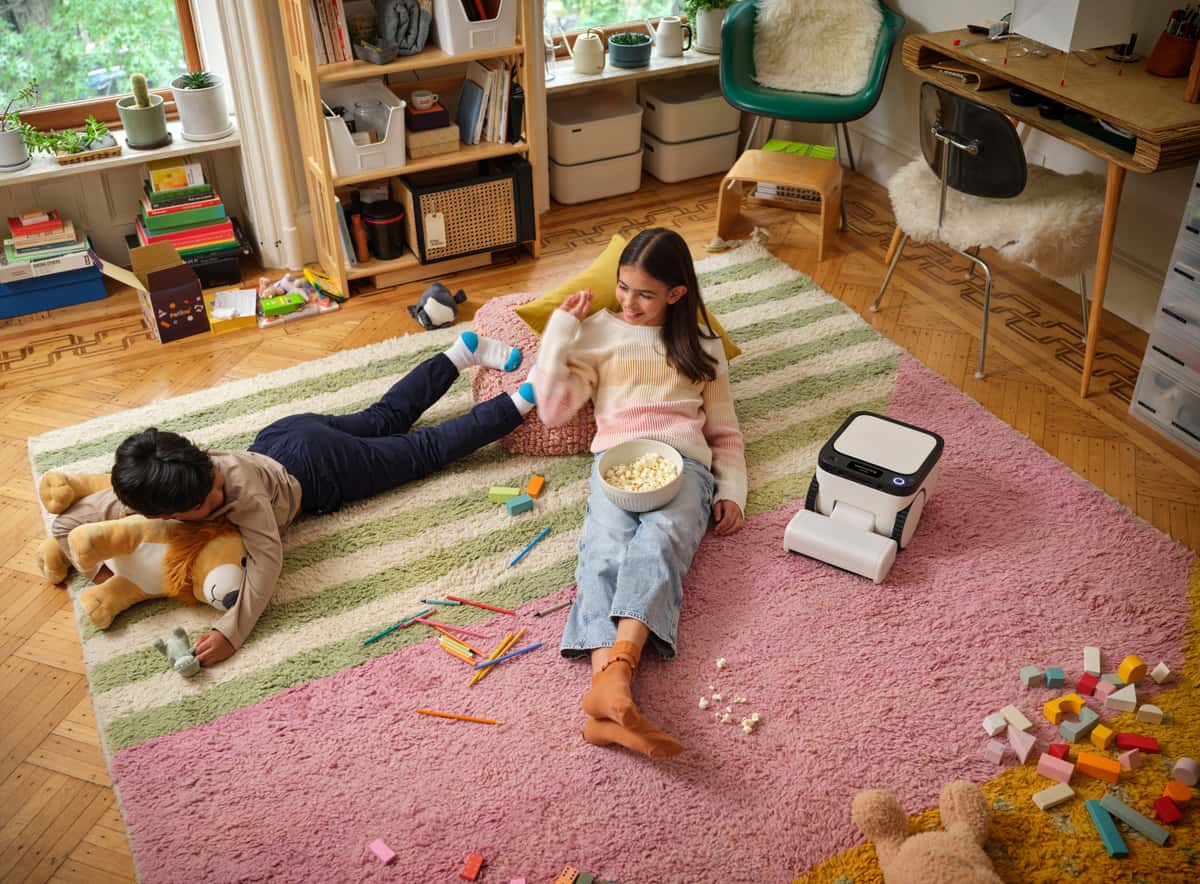
Then there’s the physical constraint that no software update will fix. Vacuum Wars measured the Matic at 7.8 inches tall, against a 3.7-inch average, making it the tallest robot vacuum they’ve tested. RTINGS recorded it clearing nothing at all in their height clearance test. It cleans under no furniture. If your dust problem lives under the bed and the sofa, this machine cannot reach it.
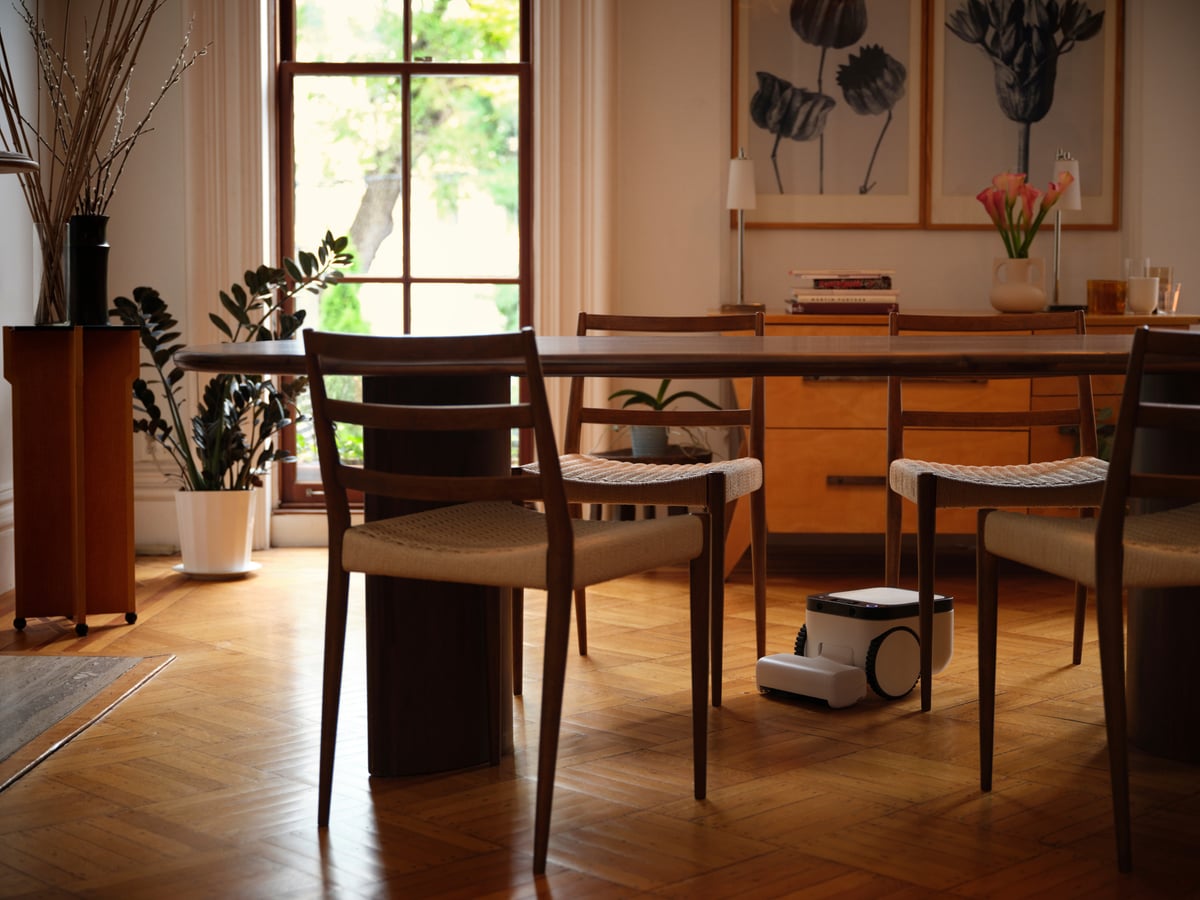
It’s also slow. Vacuum Wars measured navigation efficiency at 0.52 m² per minute against a 0.75 average, and reported a job that takes an hour on a typical robot taking 227 minutes on the Matic.
Finally, running costs are high, and because wet and dry waste share one bag, odour develops within roughly a week. RTINGS also flag that the Matic has no traditional cliff sensors, so be careful if you have open ledges or stairs.
Why the Verdicts Differ
Here’s the reconciliation, and it comes down to three things.
Dates. WIRED’s review is dated 3 May 2025. RTINGS’ retest is from July 2026. That’s fifteen months and an unknown number of firmware revisions apart, on a first-generation product whose maker ships software updates continuously.
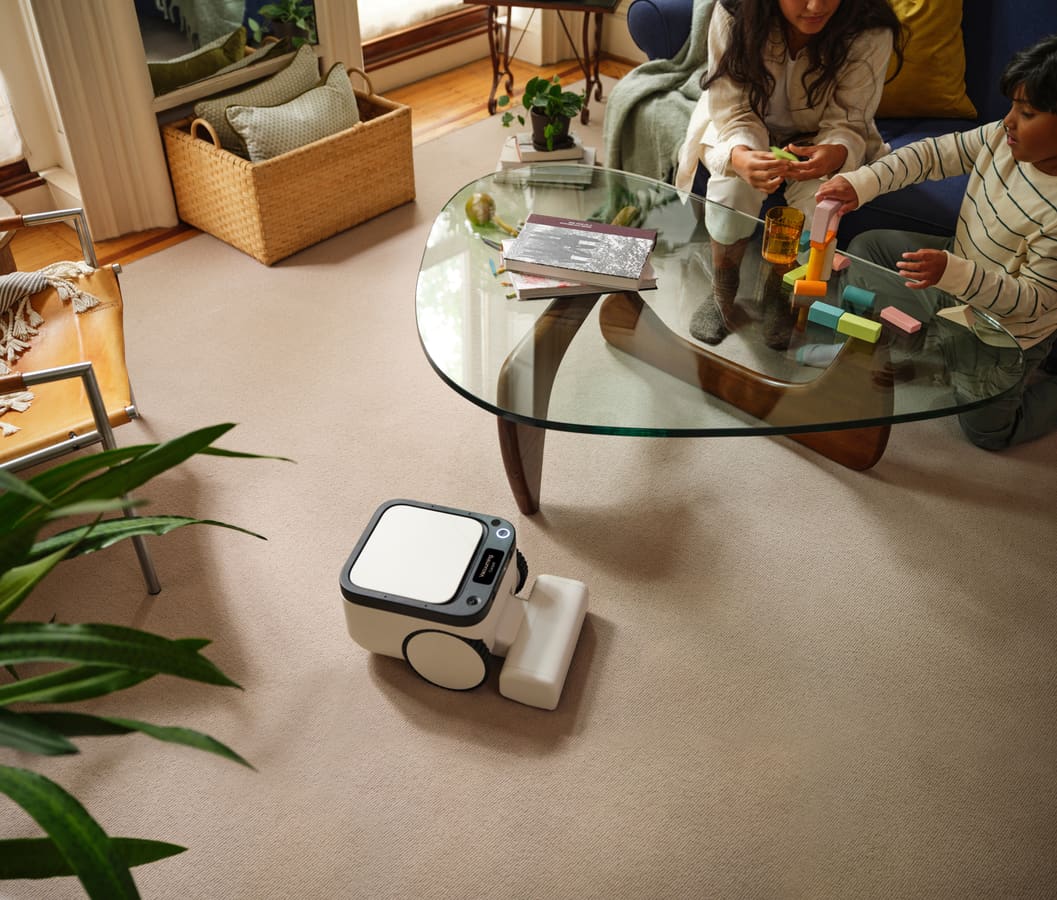
What each was measuring. WIRED’s reviewer assessed whether the Matic was pleasant enough that she’d actually run it, and concluded that it was: quiet enough to use while her kids watched TV, easy to direct, good at learning its way around table legs. On that question the Matic wins outright, and it’s not a trivial question. A robot vacuum you never run because it’s loud or gets stuck cleans nothing at all. RTINGS asked a narrower and stricter question: how much debris comes off a standard test surface. Those are different tests, and the Matic passes one and fails the other.
Hardware versus software. Every one of the Matic’s strengths is a hardware property. Every one of its failures is a software behaviour. Record airflow, excellent cameras and superb obstacle recognition are built in. Missed corners, pathing bugs, stains misread as obstacles and coverage the app knows about but won’t act on are all code. That’s a fixable class of problem, but it isn’t fixed yet.
To be fair, an RTINGS commenter who owns a Matic reported that firmware updates had improved edge cleaning since their test, and an RTINGS tester replied that they’d look at retesting. Treat the July 2026 results as accurate for July 2026, not as permanent.
The Price Has Moved the Wrong Way
WIRED’s review made a point of the Matic costing a fraction of comparable flagships.
Matic’s own site now asks noticeably more than the price WIRED quoted, and its standard (undiscounted) price is higher again. So the machine costs more today than in the review that Matic still quotes in its marketing, and the value argument that helped earn the 10/10 is weaker now than when it was made. Check Matic’s site for the current figure before you decide.
Add-ons sit on top: Matic sells an annual bag pass per robot and paid extended warranty cover.
Two Things to Know Before You Buy
You can’t buy it on Amazon. Matic sells direct only, through its own site, shipping to the US lower 48. There’s no Amazon listing and no retail presence. That means no Prime returns, no Amazon customer service escalation, and no marketplace price competition. Matic offers a six-month money-back guarantee instead, which is a genuinely strong policy, but it’s their policy rather than a retailer’s.
The app has some privacy rough edges. RTINGS found the app has no login at all. Tapping “Software Review Program” in settings enrols you with no confirmation prompt, and getting out requires contacting support. The video button on the main screen looks like a live camera feed but actually records a clip and sends it to Matic’s team, with a warning that’s easy to click past and no chance to review the footage first. That’s an odd finding for a company whose main pitch is privacy through on-device processing, and it’s fixable, but it’s the current state.
Who Should Buy One, and What to Buy Instead
Buy a Matic if wet spill pickup genuinely matters to you, if obstacle avoidance is the thing that’s been driving you mad about robot vacuums, if you have pets and want a machine that reliably avoids accidents, and if you’re comfortable being an early adopter on first-generation software. Your furniture also needs to be irrelevant to the job, because it isn’t going under any of it.
For most people, though, the honest answer is that a conventional flagship will clean your floors better today. RTINGS names specific alternatives, and we card the ones you can actually buy.
Roborock Saros 10R
The machine RTINGS points to directly as the better everyday cleaner, at similar money. It beats the Matic on hard floors, carpet and stains, and it’s low enough to go under furniture. You give up the wet spill trick and a little obstacle-avoidance polish. For a fuller picture of the competition, see our best robot vacuum guide.
Ecovacs Deebot X12 OmniCyclone
Strong obstacle handling with a proper multifunction dock that empties and washes for you, at a lower price point than the Matic. Consider it if the Matic’s onboard-everything design appeals in theory but you’d rather not be changing a smelly bag weekly.
iRobot Roomba Max 705 Combo
The conservative pick. Established brand, wide parts availability, straightforward support, and none of the first-generation software risk. If you want a robot vacuum that just gets on with it, this is the safer buy. Our robot vacuum brand comparison puts iRobot in context against the newer entrants.
The Verdict
The Matic is the most interesting robot vacuum anyone has built in years, and it isn’t the best one you can buy. Both things are true at once, which is exactly why its reviews look like they’re describing different products.
If you want the machine that will pick up the most dirt from your floors this month, buy a Roborock. If you want to back a genuinely new idea and you can live with a first-generation product at a premium price, the Matic is a defensible choice, and the six-month refund window means you’re not stuck with it.
What would change this assessment is a firmware release that fixes the pathing. The hardware is already there. Whether Matic can get the software to match is the only question that matters, and it’s worth revisiting when RTINGS runs their retest.
All test results cited here come from published reviews by WIRED (3 May 2025), RTINGS (published 1 April 2026, retested 27 July 2026), Vacuum Wars, and HowToGeek. Pricing and specifications were checked against maticrobots.com on 15 August 2026. Product photography courtesy of the Matic Robots press kit.
Recommended Products
Roborock Saros 10R Robot Vacuum and Mop
Best alternative at similar moneyThe direct standard-tier successor to the S8 MaxV Ultra, with the ultra-slim chassis and detachable mop system that define the Saros line. Pick this over the Saros 20 if you need 3.14-inch furniture clearance and don't need Saros 20's higher suction; pick the Saros 10 over this if mopping pad lift on carpet matters more than runtime.
What We Like
- 22,000 Pa HyperForce suction with 6,400 mAh battery and ~180 min runtime in low-power mode
- 3.14-inch chassis with no LiDAR tower clears low furniture that blocks most flagships
- Detachable spinning mops auto-removed at the dock so the robot vacuums carpet without dragging wet pads behind
- 80 deg C hot-water mop wash in the Multifunctional Dock 4.0 (mops run at 70 deg C, dock cycle peaks at 80 deg C)
- StarSight 2.0 (3D ToF + VertiBeam) navigation with AdaptiLift chassis for thresholds and carpet edges
What We Don't
- Mop pads only lift ~8 mm vs Saros 10's 18 mm, giving less carpet clearance and higher wet-carpet risk (Vacuum Wars)
- Vacuum Wars rated navigation efficiency below the Saros 10 (3.84 vs 4.2)
- Uses noticeably more water per mopping pass than the Saros 10
- Wi-Fi is 2.4 GHz only, no 5 GHz support
Ecovacs Deebot X12 OmniCyclone Robot Vacuum and Mop
Best obstacle avoidance with a real dockEcovacs' 2026 flagship pushes mopping innovation further than anyone else with FocusJet stain pre-treatment and a cyclone dock that ditches dust bags entirely, though carpet cleaning is merely average for the money.
What We Like
- FocusJet pre-spray loosens dried stains before the roller mop arrives, lifting dirt instead of smearing it
- OZMO Roller 3.0 self-washing mop runs continuously at 220 RPM and lifts 15mm to clear carpets cleanly
- Bagless cyclone dock removes the ongoing cost of replacement dust bags
- 100% pet hair pickup with ZeroTangle 4.0, no hair wrap on the main brush in Vacuum Wars' 7-inch hair test
- PowerBoost charging restores 13% of battery in three minutes, useful for mid-clean top-ups
What We Don't
- Only average deep carpet cleaning performance versus other premium flagships
- Crevice and edge pickup tested below average
- 250mL onboard dustbin is small; expect frequent dock empties in pet-heavy homes
- Premium price and a young accessory ecosystem (replacement rollers, filters) lock you into Ecovacs consumables
iRobot Roomba Max 705 Combo Robot Vacuum and Mop
Best established-brand pickA specialist rather than an all-rounder. Buy it if you want the best robot mopping available and can live with mediocre pet-hair pickup, because that trade is the whole product. At the clearance price it makes sense; at list it never did.
What We Like
- The heated PowerSpin roller mop is the reason to buy it. Homes & Gardens called it "one of the best mopping systems around" and the closest a robot has come to a deep manual clean
- AutoWash dock washes and heat-dries the roller itself, so there is no rinsing and no bucket
- Handles large debris well on hard floors and tested strongly on carpet
- Quiet in use, with reliable ClearView Pro LiDAR navigation and 9-minute mapping of a 1,000 sq ft floor
- 75 days of auto-emptying and roughly 8 weeks of mopping between dock refills
What We Don't
- Pet hair is its weak point, which matters on a vacuum at this price. Reviewers consistently report disappointing pet-hair pickup, and independent testing put low-pile carpet pickup at 65-69%
- Reliability is the recurring complaint. It has been described as the most error-prone Roomba reviewed, and the most detailed YouTube test on it was conducted across three replacement units
- Bulky enough that it struggles with tight spaces and low furniture
- Obstacle detection errs on the oversensitive side, stopping for things it could clear
- Superseded by the Max 775 in July 2026, and discounted well below list as a result, which is the value case and the warning in the same sentence
Sources & Research
- Roborock US Official Product Page
- Amazon Product Listing
- Vacuum Wars Saros 10R vs 10 Comparison
- Ecovacs Official Product Page
- Amazon Product Listing
- Vacuum Wars Review
- iRobot Official Product Page
- Amazon Product Listing
- Homes & Gardens hands-on review (one month, household with pets)
- Consumer Reports
Continue Reading
Explore more robot vacuums content or browse our other categories.
Frequently Asked Questions
- Can you buy the Matic on Amazon?
- No. Matic sells direct through maticrobots.com only, and ships to the US lower 48 states. There's no Amazon listing, no Walmart listing, and no retail presence. If you see a search result suggesting otherwise, it's showing you a different brand.
- Why did WIRED give it 10/10 when RTINGS rated it so poorly?
- They reviewed different machines, roughly fifteen months apart, against different criteria. WIRED's review is dated 3 May 2025 and judged the Matic on whether it was pleasant enough to actually run every day. RTINGS published in April 2026 and retested in July 2026, measuring debris pickup on a standardised bench. The Matic scores well on the first question and badly on the second.
- Does the Matic really have the highest suction of any robot vacuum?
- Vacuum Wars measured 8.11 kPa, the highest of the roughly 200 robot vacuums they've tested, along with 35 CFM of airflow. That figure is about raw capability at the inlet. It doesn't translate into the best cleaning results, because the Matic's navigation frequently fails to bring that suction to the debris in the first place.
- What is Matic Cues?
- Cues is the voice and gesture control system Matic announced on 14 August 2026. It lets you point at a mess and say "Hey Matic, clean this". No independent lab has tested it yet, so treat the capability as announced rather than verified. Notably, WIRED listed voice and gesture control among the features the Matic lacked in the review that earned it the 10/10.
Written By
Home Vacuum Zone
Our team researches vacuum cleaners against published specifications and independent lab results to help you make confident buying decisions.
Related Articles
Best Robot Vacuums of 2026: Top Picks Reviewed & Compared
Six robot vacuums chosen on independent test results rather than spec sheets, covering carpet, pet hair, obstacle avoidance and mopping. Every pick verified as buyable before publishing.
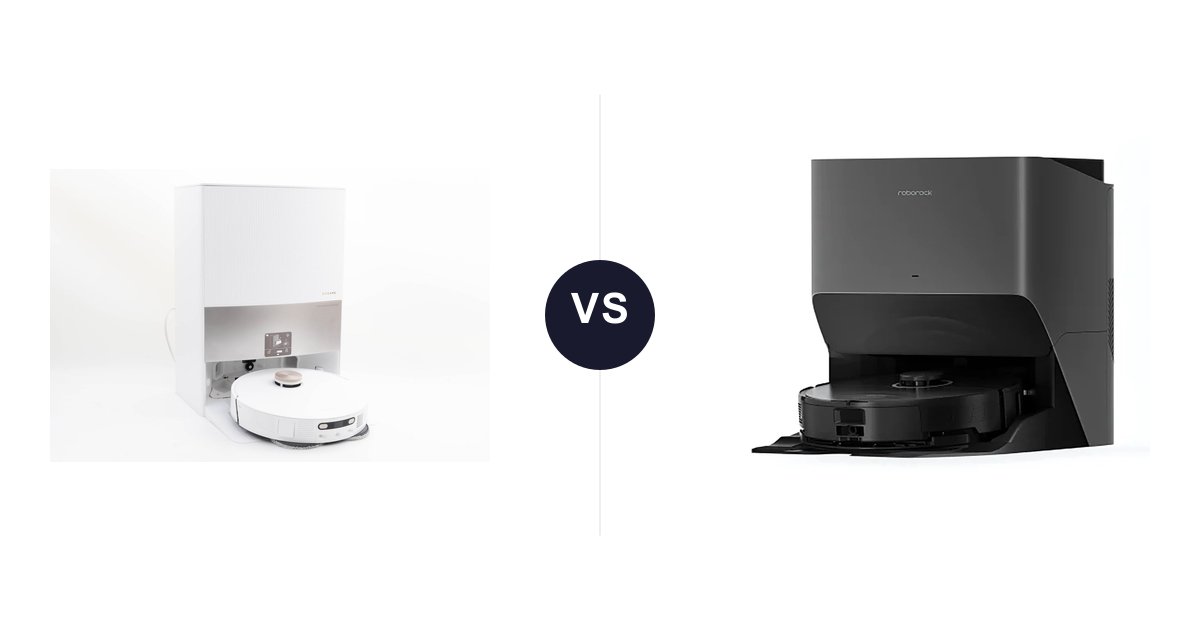
Dreame vs Roborock: Which Robot Vacuum Brand Is Better in 2026?
Dreame and Roborock are two of the fastest-growing robot vacuum brands. We compare their flagship models across navigation, suction, mopping, self-emptying stations, and value to help you pick the right one.
What Happened to Neato? Best Robot Vacuum Alternatives in 2026
Neato Robotics shut down in 2023 after Vorwerk discontinued the brand. Learn what happened, why Neato failed, and which robot vacuums are the best replacements for former Neato owners in 2026.